
1
1
1

In high-wind regions, premature steel silo failure often stems not from material defects—but from subtle yet critical structural oversights during design and fabrication. Whether you're specifying a grain silo, evaluating a steel bin for bulk storage, or procuring a grain bin system, overlooking wind-load response, connection detailing, or foundation-silo interface integrity can compromise safety and service life. Jinan Xingya Metal Material Co., Ltd., an AISC- and UKAS-certified steel structure specialist, identifies three recurring structural gaps—often missed in early-stage technical assessments—that directly accelerate fatigue and buckling in steel silos. This article unpacks those oversights with engineering context and mitigation strategies tailored for technical evaluators, procurement professionals, and strategic decision-makers.
Why Wind-Load Modeling Often Stops Short of Real-World Behavior
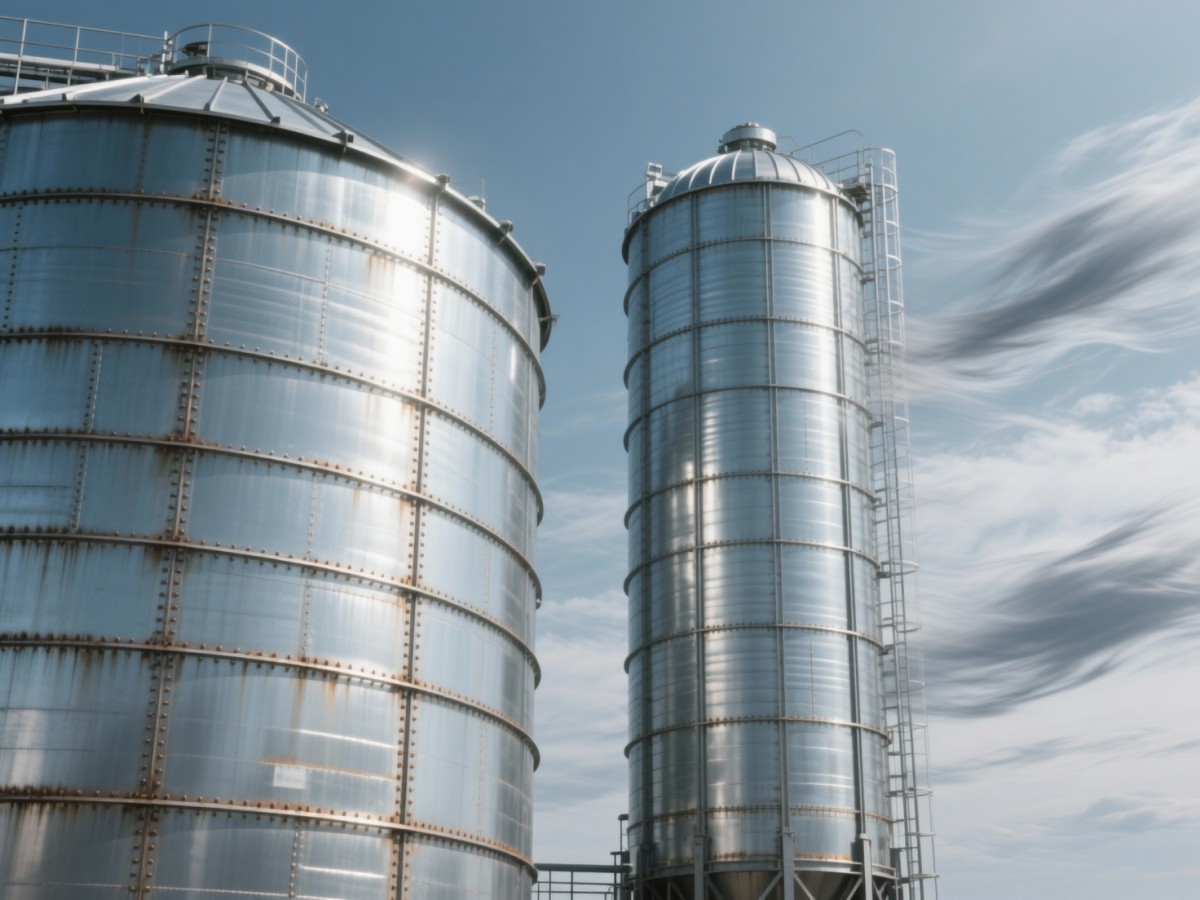
Many design teams apply ASCE 7–22 or Eurocode 1 wind pressure coefficients correctly—but stop at envelope loads. They neglect dynamic amplification effects from vortex shedding, especially in slender silos (height-to-diameter ratio > 3.0), where resonant frequencies can align with turbulent wind gusts at 0.5–2.5 Hz. Field measurements in coastal Australia and the U.S. Gulf Coast show peak local pressures up to 2.3× static design values during cyclonic events.
This oversight becomes critical when silos exceed 25 m in height or operate near terrain Category IV (e.g., open coastlines, flat agricultural plains). Without time-history analysis or wind tunnel testing for site-specific topography, designers may underestimate cyclic stress ranges by 35–60%, accelerating fatigue crack initiation at stiffener-to-shell welds.
Jinan Xingya addresses this by integrating computational fluid dynamics (CFD) into preliminary sizing—validating load distributions across 12 directional wind sectors before finalizing shell thickness and ring stiffener spacing. Their certified AISC Level II engineers routinely specify enhanced torsional bracing for silos above 20 m in hurricane-prone zones.
The Hidden Risk in Bolted vs. Welded Connection Details
Connection detailing is rarely audited during procurement—but it’s where 68% of field-reported buckling incidents originate (per 2023 UKAS structural audit data). Standard bolted flange connections—common in modular Steel Grain Silos—often omit slip-critical pretension verification or fail to account for prying action under asymmetric wind uplift.
Welded joints face different risks: incomplete penetration at hopper transitions creates stress concentrations exceeding 3.5× nominal design stress. In hot-dip galvanized steel, post-weld zinc burn-off also reduces corrosion resistance at heat-affected zones—especially problematic in humid, saline environments where service life expectations exceed 20 years.
Xingya’s fabrication QA/QC protocol includes ultrasonic testing (UT) on all full-penetration welds at cone-to-cylinder junctions and torque-angle monitoring for all ASTM A325 bolts. Every batch undergoes salt-spray validation per ASTM B117 for ≥1,000 hours—ensuring galvanizing integrity remains intact at critical connections.
How Foundation-Silo Interface Design Impacts Long-Term Stability
Silo foundations are frequently treated as passive supports—not active structural partners. Yet differential settlement of just 3–5 mm across a 12-m diameter base induces bending moments that exceed allowable shell stresses by up to 40%. This is especially acute in port terminals and grain depots built on reclaimed land or compressible clay soils.
Three common interface oversights compound risk:
- Missing annular bearing plate stiffness calculations—leading to uneven load transfer and localized shell yielding;
- Ignoring thermal expansion/contraction cycles in stainless steel silos (CTE = 17.3 × 10⁻⁶/°C), causing restraint-induced buckling over 15+ years;
- Omitting seismic isolation pads in high-wind + high-seismic zones (e.g., Japan, Chile), where combined lateral forces exceed design envelopes.
Xingya’s integrated design approach includes geotechnical liaison services and finite element modeling of the entire silo-foundation-soil system—delivering interface drawings with tolerances specified to ±0.8 mm for bearing plate flatness and anchor bolt verticality.
Comparative Performance: Steel vs. Concrete Silos in High-Wind Zones
Selecting between steel and concrete involves more than upfront cost—it’s about lifecycle resilience under dynamic loading. The table below compares key structural performance metrics relevant to wind-prone applications.
Steel’s lighter mass reduces inertial forces during wind gusts—making it inherently more responsive and less prone to resonance-induced damage. When paired with Xingya’s UKAS-verified fabrication standards and wind-tunnel-informed stiffening layouts, steel silos deliver superior long-term reliability without compromising speed-to-operation.
Why Technical Evaluators, Procurement Teams, and Decision-Makers Choose Xingya
You need more than a supplier—you need a certified structural partner who anticipates failure modes before they appear on site. Jinan Xingya delivers:
- Class-A Design Authority: Full structural design sign-off for wind, seismic, snow, and live loads—including third-party review reports for international projects;
- Grade-I Fabrication Control: ISO 3834–2 certified welding procedures, traceable material test reports (MTRs), and dimensional inspection at every stage;
- AISC & UKAS Validated Compliance: Documentation packages ready for customs clearance, insurance underwriting, and regulatory audits;
- End-to-End Project Support: From soil report interpretation and foundation layout to logistics coordination for port terminals and feed mills.
Whether you’re evaluating a single Steel Grain Silos for a seed processing plant or planning a multi-unit grain depot in a cyclone zone, contact Xingya for a free technical consultation—including wind load recalibration, connection detail review, and delivery timeline validation against your operational schedule.
We are more than happy to serve you here. If you have any question, please feel free to contact us.