
1
1
1
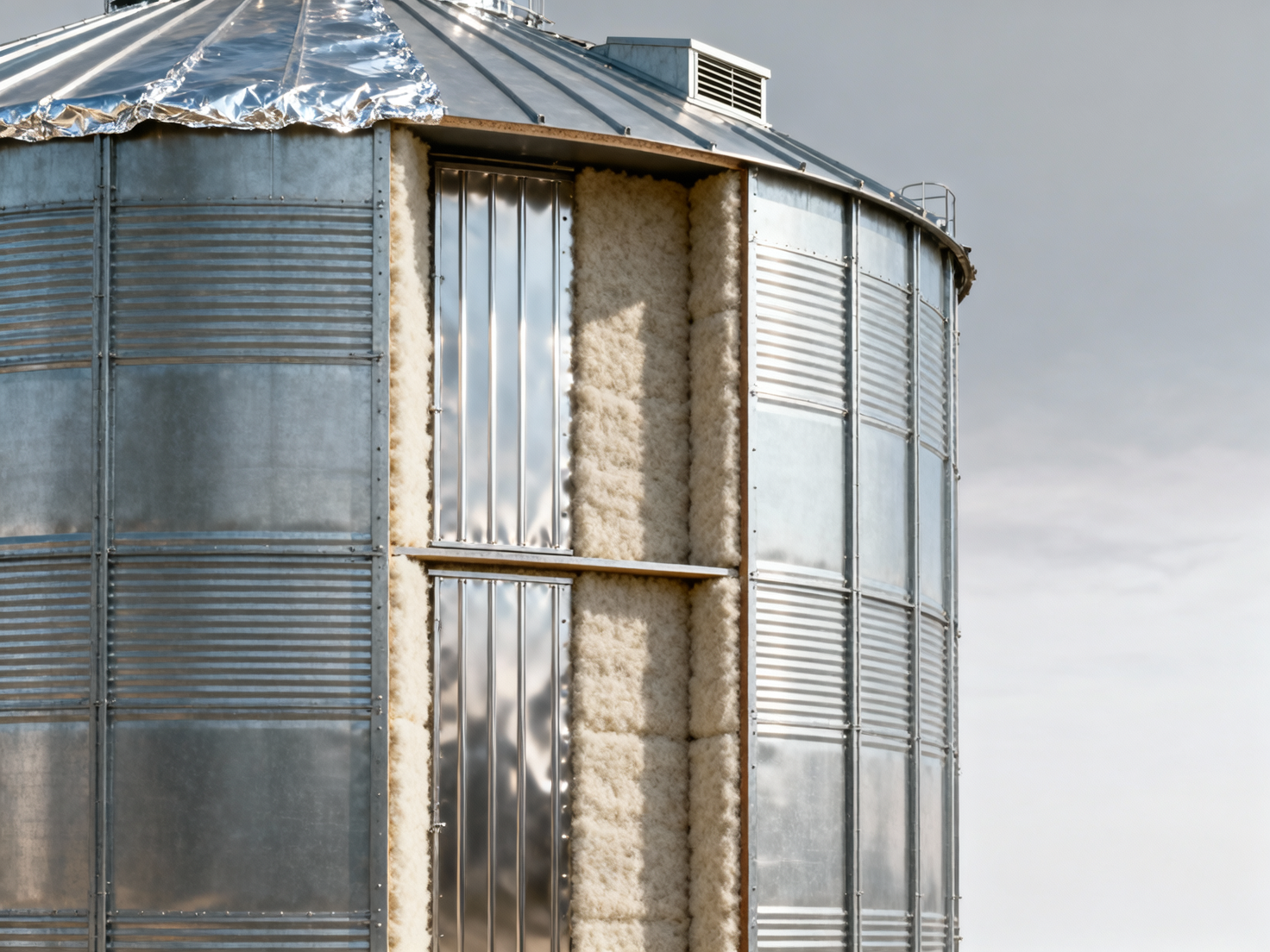
Temperature fluctuations inside vertical steel silos significantly compromise grain quality—triggering spoilage, insect proliferation, and moisture migration. As critical infrastructure in modern grain storage, steel silos, grain silos, grain bins, and steel bins demand precision-engineered thermal management. For technical evaluators, procurement professionals, and corporate decision-makers, understanding these risks—and implementing proven mitigation strategies—is essential to safeguard yield, compliance, and ROI. Jinan Xingya Metal Material Co., Ltd., a Class-A certified steel structure specialist with AISC and UKAS accreditations, delivers intelligent, climate-resilient silo solutions tailored for global agri-logistics.
Why Temperature Swings Matter More Than You Think
Vertical steel silos are engineered for structural integrity—but their thermal behavior is often overlooked during procurement. Ambient temperature shifts of just ±8°C can induce internal gradients exceeding 15°C between top and bottom zones. This drives convective air movement, condensation at cooler surfaces, and localized hot spots where mold spores germinate within 48 hours.
Moisture migration isn’t theoretical: studies by the American Society of Agricultural and Biological Engineers (ASABE) show that a 3°C differential across a 12m silo height can move up to 0.8% moisture content toward colder walls—enough to elevate surface moisture in stored wheat from 12.5% to 13.9%, crossing safe storage thresholds.
Insect activity accelerates exponentially above 20°C. Grain weevils double their development rate between 22°C and 28°C—a range routinely reached in unshaded steel silos under summer sun exposure. Without passive or active thermal control, post-harvest losses climb 0.5–1.2% per month in tropical and subtropical climates.
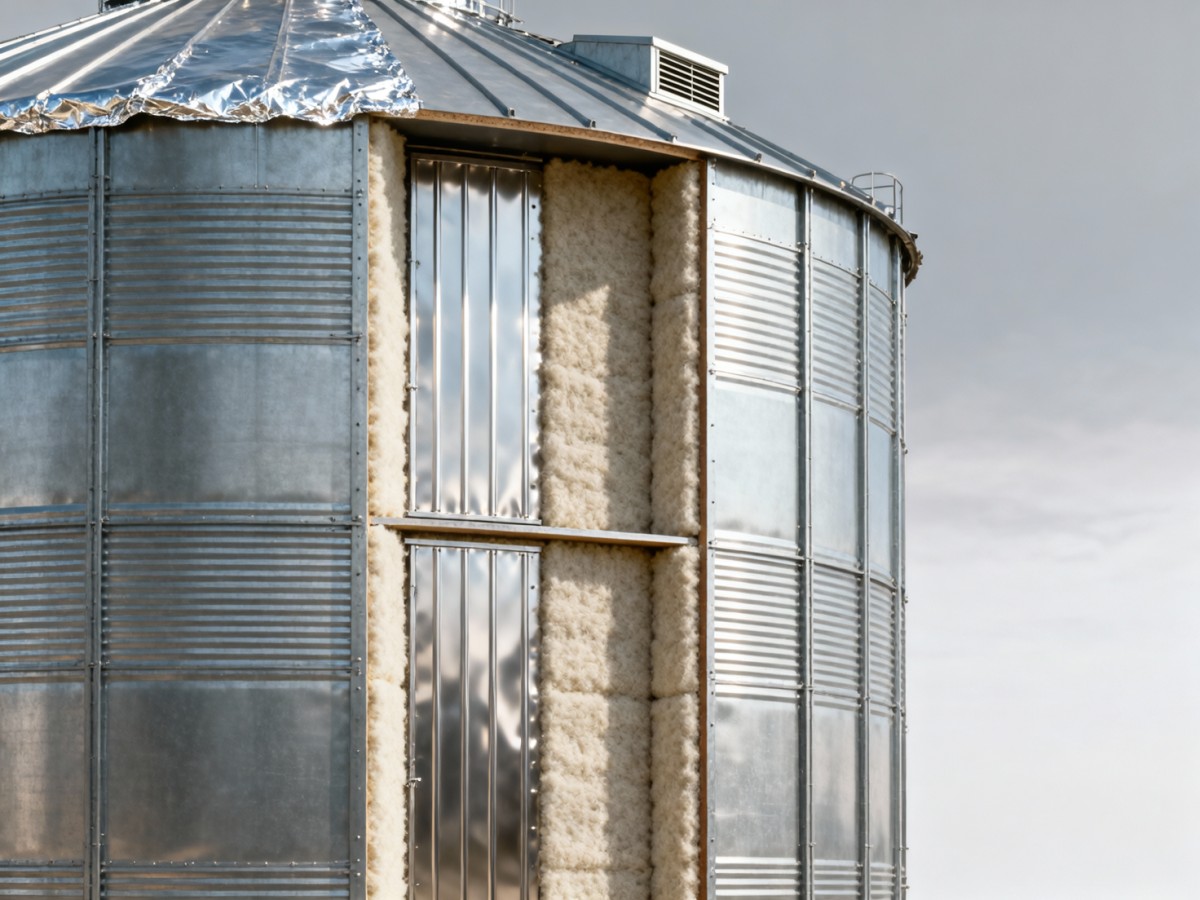
How Steel Silo Design Impacts Thermal Stability
Unlike concrete, steel has high thermal conductivity (~50 W/m·K), meaning external heat transfers rapidly inward. But this isn’t inherently negative—it enables responsive thermal management when combined with smart cladding, insulation integration, and geometry optimization.
Key design levers include wall thickness (typically 3–8 mm), surface finish (hot-dip galvanized vs. stainless steel), and cavity configuration. For example, double-wall silos with 50mm mineral wool fill reduce diurnal amplitude by up to 65% compared to single-wall units—verified in field trials across ports in Guangdong and feed mills in Kansas.
Bottom geometry also affects thermal stratification. Hopper-bottom silos promote faster discharge and less grain residence time near warm sidewalls, while flat-bottom variants require longer dwell times—increasing exposure risk unless paired with aeration systems calibrated to 12–18°C target ranges.
Critical Thermal Performance Parameters
These parameters aren’t abstract metrics—they define real-world operational boundaries. A silo installed at a port terminal in humid coastal conditions must prioritize low-emissivity coatings and integrated ventilation, whereas inland feed mills may emphasize rapid-installation modularity and aeration interface compatibility.
Proven Mitigation Strategies—Engineered for Scale
Effective thermal management combines passive design and active controls. Passive methods include reflective roof coatings (albedo ≥0.75), ventilated air gaps (minimum 50mm), and strategic orientation (long axis aligned north-south to minimize east-west solar gain). Active systems involve variable-speed aeration fans (3–12 CFM/bu), temperature-triggered dampers, and IoT-enabled monitoring nodes sampling every 15 minutes.
Jinan Xingya integrates both approaches into its Steel Grain Silos, offering factory-applied thermal barrier linings and pre-wired sensor ports compatible with industry-standard SCADA platforms. Each unit undergoes thermal stress simulation using ASCE 7-22 load combinations before fabrication.
Real-world validation shows that silos equipped with dual-layer cladding + automated aeration reduce average grain temperature variance to ≤3.2°C over 90 days—well below the 7°C threshold linked to measurable quality degradation in maize and soybean. Service life remains 15–30 years, with hot-dip galvanized steel achieving ≥85μm zinc coating per ISO 1461.
Implementation Checklist for Procurement Teams
- Verify thermal performance data is derived from ASTM C1363 or EN ISO 10456 testing—not manufacturer estimates
- Confirm wall thickness meets local wind/snow load requirements per GB 50017 or AISC 360-22
- Require third-party verification of galvanizing thickness and adhesion (UKAS-accredited lab report)
- Validate compatibility of aeration interface dimensions with existing blowers or ducting standards (e.g., ASAE S358.3)
Why Jinan Xingya Delivers Trusted Thermal Resilience
Technical evaluation isn’t just about specs—it’s about traceability, accountability, and field-proven execution. Jinan Xingya holds Class-A Specialized Design Qualification for Steel Structures and Grade-I Manufacturing Certification—ensuring every Steel Grain Silos is engineered to withstand thermal cycling fatigue over 10,000+ cycles without seam degradation.
Our AISC-certified fabrication facility applies strict tolerances: wall flatness ≤±1.5mm/m², bolt hole alignment ≤±0.3mm, and weld penetration verified via ultrasonic testing (UT Level II per AWS D1.1). UKAS-accredited QA/QC protocols cover raw material traceability, galvanizing bath chemistry logs, and post-fabrication thermal emissivity validation.
For procurement professionals balancing speed, compliance, and long-term TCO: our modular steel silos deliver full installation in 7–15 days versus 60–90 days for concrete alternatives—without compromising on thermal resilience or food-grade sealing integrity.
Next Steps for Technical & Procurement Decision-Makers
Contact Jinan Xingya today to request: (1) Thermal simulation report for your specific location and grain type, (2) AISC/UKAS certification portfolio, (3) Reference project list with port terminals and feed mills in your region, (4) Lead time and customization options for hopper-bottom or flat-bottom configurations, and (5) Integration support for existing PLC or grain management software.
We are more than happy to serve you here. If you have any question, please feel free to contact us.