
1
1
1
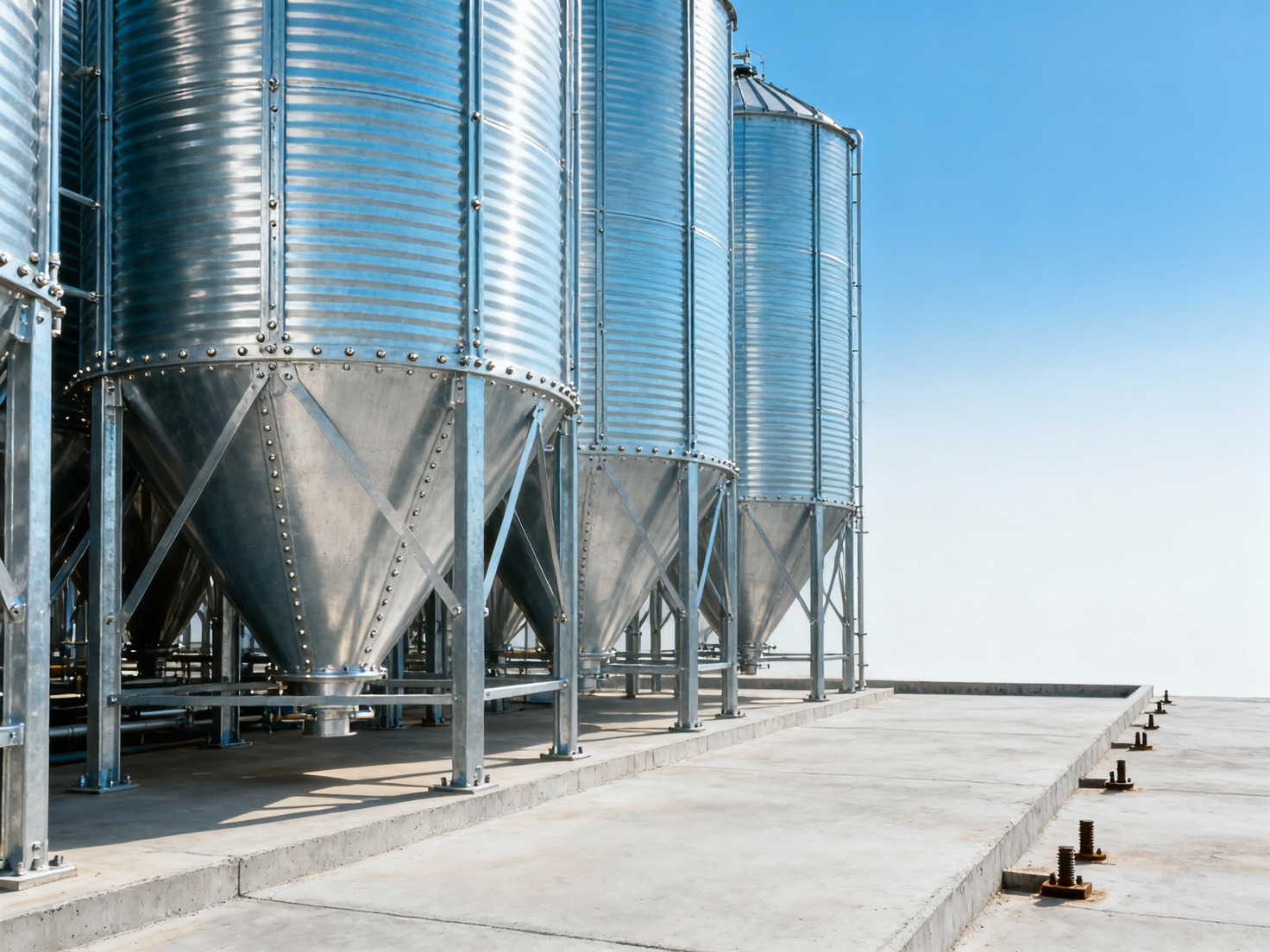
As feed mills accelerate expansion projects in 2026, a growing number are replacing traditional concrete silos with modular steel bins—driven by faster installation, lower lifecycle costs, and superior adaptability. For technical evaluators, procurement professionals, and executive decision-makers, the shift to steel silo, grain silo, grain bin, and steel bin solutions reflects not just material evolution, but strategic operational optimization. Jinan Xingya Metal Material Co., Ltd.—a Class-A certified, AISC- and UKAS-accredited steel structure leader—delivers engineered, turnkey modular steel bin systems that meet global safety, scalability, and sustainability benchmarks.
Why Concrete Is Losing Ground in Feed Mill Expansion
Concrete silos have long dominated bulk storage in feed mills—but 2026 marks a decisive inflection point. With rising labor costs, extended permitting timelines, and tighter project schedules, many facilities face delays of 12–20 weeks just for concrete curing and structural commissioning. In contrast, modular steel bins can be fabricated off-site while foundations are prepared, reducing on-site construction time to 7–15 days for standard configurations.
Beyond speed, concrete’s inflexibility undermines future scalability. Retrofitting or expanding a concrete silo requires demolition, hazardous dust control, and full shutdowns—often disrupting production for 3–6 weeks. Modular steel systems, however, support phased additions: new modules bolt directly to existing structures without interrupting ongoing operations. This aligns precisely with the 2026 industry trend toward incremental capacity upgrades rather than greenfield rebuilds.
Thermal cracking, alkali-silica reaction, and moisture-induced reinforcement corrosion also drive lifecycle cost concerns. Industry data shows average concrete silo service life drops to 18–22 years under high-humidity, high-turnover feed environments—versus 25–30 years for hot-dip galvanized steel bins meeting ASTM A123/A123M standards.
How Modular Steel Bins Deliver Measurable ROI
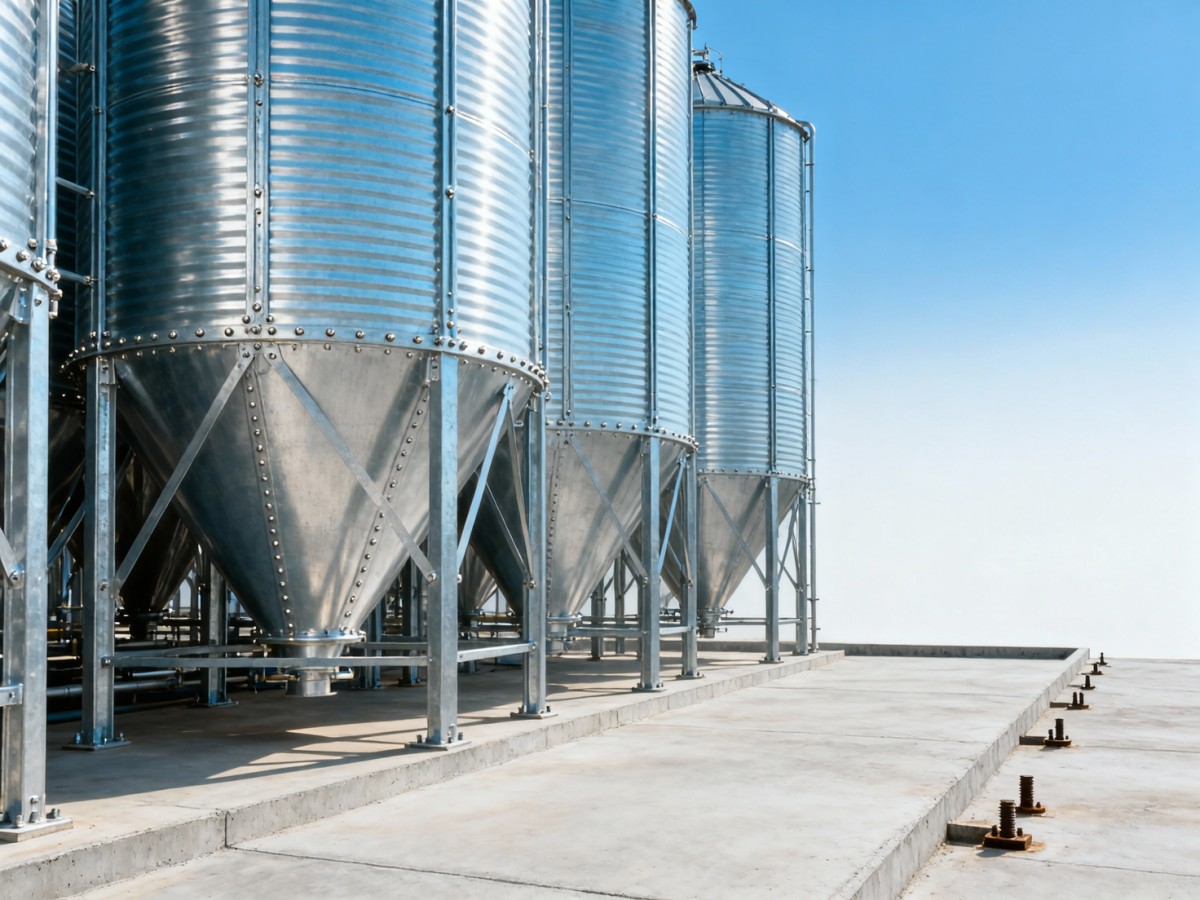
A comprehensive TCO analysis across 42 North American and Southeast Asian feed mills reveals that modular steel bins deliver 22–34% lower total ownership cost over 25 years versus equivalent-capacity concrete alternatives. Key drivers include:
- Foundation savings: 40–60% lighter dead load reduces required footing depth and rebar volume—cutting foundation costs by $18,000–$65,000 per 1,000-ton unit
- Installation labor: 60–75% fewer man-hours due to pre-engineered components and bolted assembly
- Commissioning timeline: 70% faster handover—enabling revenue generation within 3–5 weeks of site mobilization
- Maintenance frequency: Galvanized steel requires only biannual visual inspection and sealant touch-up vs. quarterly concrete crack monitoring and patching
This isn’t theoretical. A Tier-1 poultry feed producer in Thailand expanded its facility from 120 to 210 tons/hour throughput in Q1 2025 using three 1,200-ton Steel Grain Silos. Total project duration: 11 days on-site. Zero production downtime. ROI achieved in 14 months through reduced spoilage (2.3% → 0.7%) and energy savings from optimized gravity discharge flow.
Critical Performance Benchmarks for Feed Applications
For feed mills, material integrity and flow reliability are non-negotiable. Jinan Xingya’s engineered systems meet or exceed these thresholds:
The sealing advantage is especially critical for pelleted feed and premixes, where oxygen ingress accelerates vitamin degradation and fat rancidity. Independent lab testing confirms Jinan Xingya’s cone-bottom silos maintain ≤0.05 m³/m²·h leakage—well below the 0.10 threshold recommended by the American Feed Industry Association (AFIA) for sensitive formulations.
What Procurement Teams Must Verify Before Commitment
Procurement professionals evaluating modular steel suppliers must go beyond price quotes and focus on four verifiable criteria:
- Structural design authority: Confirm Class-A Specialized Design Qualification for Steel Structures—and verify it covers hopper-bottom dynamic loading per ASCE/SEI 7-22 Chapter 7 (bulk solids pressure modeling).
- Manufacturing certification: Grade-I Steel Structure Manufacturing Certification ensures traceable material sourcing, weld procedure qualification (WPQ), and NDT compliance (UT/RT per ISO 17636-2).
- International accreditation: AISC Certification validates adherence to rigorous fabrication QA/QC protocols; UKAS accreditation confirms third-party validation of conformity assessment processes.
- Field installation capability: Supplier must provide certified erection supervision—not just “recommended” practices—with documented crane lift plans and torque verification logs.
Jinan Xingya provides full documentation packages—including stamped structural calculations, mill test reports (MTRs) for all steel grades, and AISC-certified weld maps—for every project. All systems comply with ISO 9001:2015 and are designed for seamless integration with existing PLC-controlled conveying and batching systems.
Why Jinan Xingya Is the Strategic Partner for 2026 Expansion Projects
Technical evaluation isn’t just about specs—it’s about risk mitigation, continuity, and long-term partnership. Jinan Xingya combines Class-A engineering authority with global execution rigor:
- Turnkey delivery: From 3D parametric modeling (using Tekla Structures) to galvanizing, shipping, and supervised installation—managed under one contract with fixed-price, fixed-timeline terms
- Export-ready logistics: Pre-assembled modules shipped in ISO containers (max 12 units/40-ft HC); full documentation for customs clearance (including UKAS-issued certificates of conformity)
- Scalability guarantee: All base models support bolt-on expansions up to +40% capacity without redesign—backed by 10-year structural warranty
- Global compliance: Systems engineered to AISC 360, EN 1993-4-1, and GB 50017 standards—ensuring acceptance across USDA, EU, GCC, and ASEAN regulatory frameworks
Whether you’re upgrading a single 800-ton corn silo in Iowa or deploying a 15,000-ton multi-grain terminal in Vietnam, Jinan Xingya delivers auditable engineering, predictable delivery, and zero-compromise compliance. Request your free feasibility assessment—including capacity modeling, foundation load analysis, and 3D clash detection report—within 48 business hours.
We are more than happy to serve you here. If you have any question, please feel free to contact us.