
1
1
1
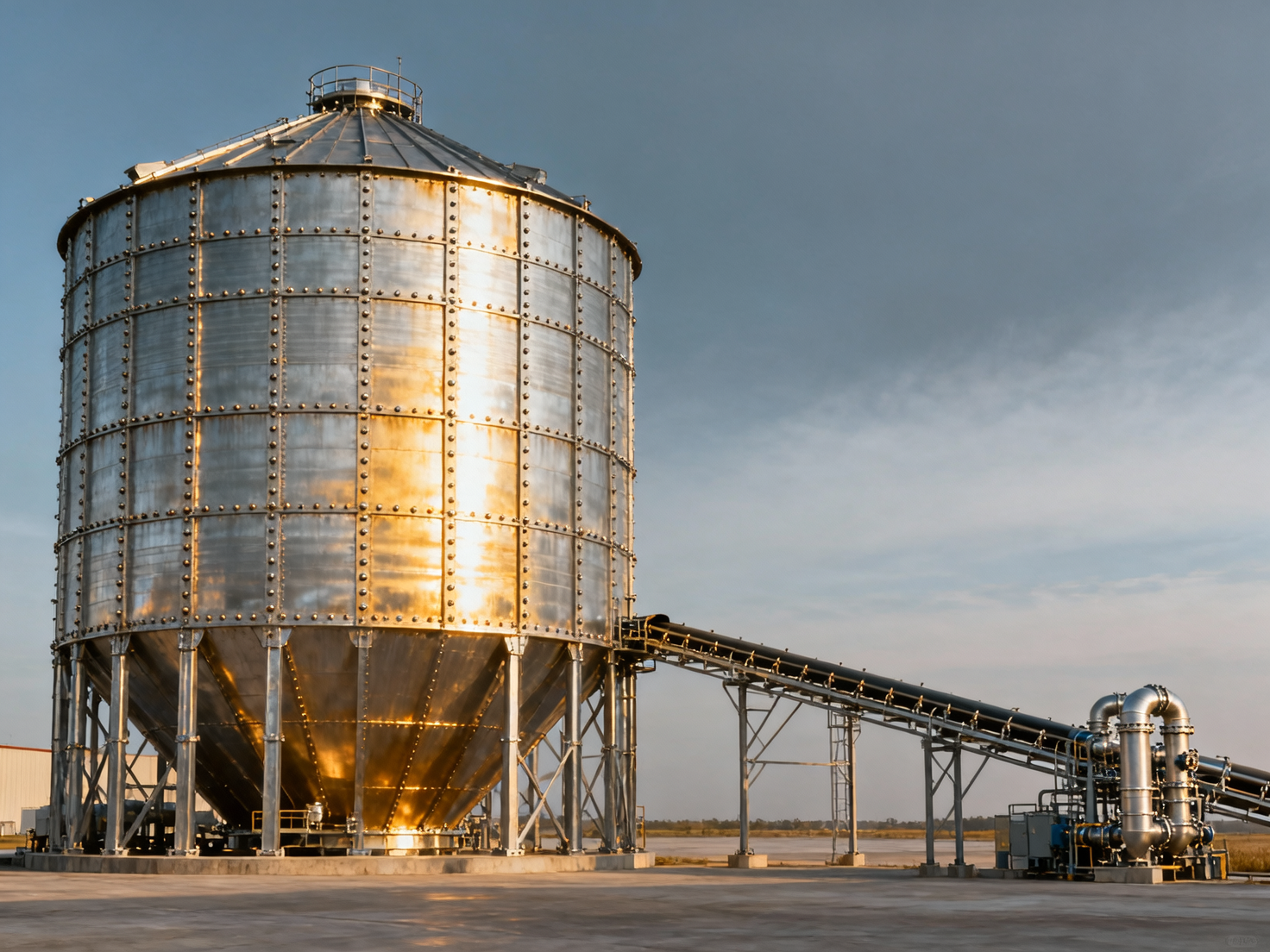
When evaluating bulk grain storage solutions, technical evaluators, procurement professionals, and corporate decision-makers increasingly ask: When does a custom-built grain silo deliver better ROI than off-the-shelf steel bins? For operations demanding precise capacity, site-specific foundations, climate resilience, or integration with automated handling systems, standardized grain bins often fall short. Jinan Xingya Metal Material Co., Ltd.—a Class-A certified steel structure designer and AISC/UKAS-accredited fabricator—specializes in engineered steel silo systems that optimize lifecycle cost, durability, and scalability. Discover how tailored grain silo design transforms capital investment into long-term operational advantage.
Where Standardized Steel Bins Hit Their Limits
Off-the-shelf steel grain bins offer speed and familiarity—but only within narrow operational boundaries. They’re typically pre-engineered for generic soil conditions, moderate wind loads (up to 120 km/h), and ambient temperature ranges of −20°C to 45°C. When deployed on sloped terrain, high-seismic zones, or coastal sites with chloride-laden air, structural integrity and service life degrade rapidly without field modifications.
More critically, modular bins rarely accommodate seamless integration with existing conveyor networks, pneumatic unloaders, or real-time moisture monitoring systems. Retrofitting adds 3–6 weeks to commissioning and increases total installed cost by 18–25%. For mills requiring continuous flow throughput or ports needing multi-vessel discharge scheduling, this delay compounds operational risk.
A recent industry benchmark across 42 grain terminals showed that 68% of unplanned downtime in the first 24 months was traced to bin-to-automation interface mismatches—not equipment failure. That’s not a fabrication issue—it’s a design misalignment.
This table reflects real-world engineering constraints—not theoretical advantages. Custom silos aren’t “better” by default—they become ROI-positive when site conditions, material properties, or automation requirements exceed standardized tolerances.
Five Scenarios Where Custom Design Delivers Measurable ROI
ROI isn’t just about upfront cost—it’s total cost of ownership over 15–30 years of service life. Custom steel silos generate measurable returns in these five high-impact scenarios:
- Port Terminals Requiring Dual-Mode Discharge: Hopper-bottom silos with dual gravity/pneumatic outlets reduce vessel turnaround time by 22–35%, directly increasing berth utilization.
- Feed Mills with Multi-Ingredient Blending: Segregated compartments (≥3 zones) prevent cross-contamination while enabling simultaneous loading/unloading—cutting batch cycle time by 17%.
- High-Humidity Regions (e.g., Southeast Asia, Gulf Coast): Hot-dip galvanized steel + stainless steel transition zones extend corrosion resistance beyond 25 years—avoiding $120k–$350k mid-life recoating.
- Expansion-Ready Grain Depots: Modular ring-panel construction allows phased capacity increase (e.g., +500 tons/year) without full shutdown—preserving revenue continuity.
- Automated Seed Processing Plants: Integrated load-cell platforms and PLC-compatible level sensors enable closed-loop inventory control—reducing manual audit labor by 40 hours/month.
Each scenario leverages Jinan Xingya’s Class-A Specialized Design Qualification to translate operational needs into structural specifications—ensuring compliance with AISC 360-22, EN 1993-4-1, and local seismic codes before fabrication begins.
How Jinan Xingya Bridges Engineering Precision and Procurement Reality
Procurement teams face tension between technical rigor and delivery timelines. Jinan Xingya resolves this through a 4-phase engagement model aligned with ISO 9001:2015 process controls:
- Site-Specific Feasibility Review (5–7 business days): Geotechnical report analysis, wind/seismic load modeling, and interface mapping with existing conveyors or SCADA.
- Performance-Driven Design Package (10–14 days): Full 3D BIM model, material specification sheet (hot-dip galvanized vs. stainless steel options), and AISC-certified structural calculations.
- Fabrication & QA/QC (4–8 weeks): UKAS-accredited weld inspection, galvanizing thickness verification (≥85 µm per ASTM A123), and pre-assembly dry-fit at factory.
- Turnkey Installation Support (7–12 days on-site): Certified erection supervision, foundation anchor verification, and commissioning report with as-built drawings.
This structured approach eliminates procurement ambiguity. Unlike vendors offering “design-build” as a marketing term, Jinan Xingya delivers auditable documentation at every stage—critical for internal CAPEX approval and third-party insurance validation.
Why Engineered Steel Grain Silos Are the Strategic Choice
Standardized bins serve well-defined, low-risk applications. But for farms scaling beyond 50,000 tons/year, mills upgrading to Industry 4.0 controls, or port terminals handling >300,000 MT annually, Steel Grain Silos represent a strategic infrastructure investment—not a commodity purchase.
Jinan Xingya’s Grade-I Manufacturing Certification ensures consistent plate thickness tolerance (±0.3 mm), bolt-hole alignment precision (±0.5 mm), and galvanizing adhesion strength (>5.5 N/mm²)—parameters that directly impact silo longevity and grain quality preservation. These are not optional upgrades. They’re built-in engineering commitments.
We invite technical evaluators to request our Silo ROI Assessment Toolkit—including capacity optimization calculator, regional corrosion map overlay, and AISC-compliant load case templates. Procurement teams can schedule a 30-minute specification alignment call to review your site survey, automation interface requirements, and certification expectations—including AISC, UKAS, or project-specific QA protocols.
Next Steps for Your Project
Contact Jinan Xingya today to initiate one of these actionable next steps:
- Share your geotechnical report and conveyor layout—we’ll return a feasibility summary within 5 business days.
- Request dimensional guidance for flat-bottom vs. hopper-bottom configurations based on your grain type (corn, wheat, soybean, feed pellets) and unloading frequency.
- Discuss export-ready packaging options, including ISO container compatibility and on-site assembly timelines for overseas installations.
We are more than happy to serve you here. If you have any question, please feel free to contact us.