
1
1
1
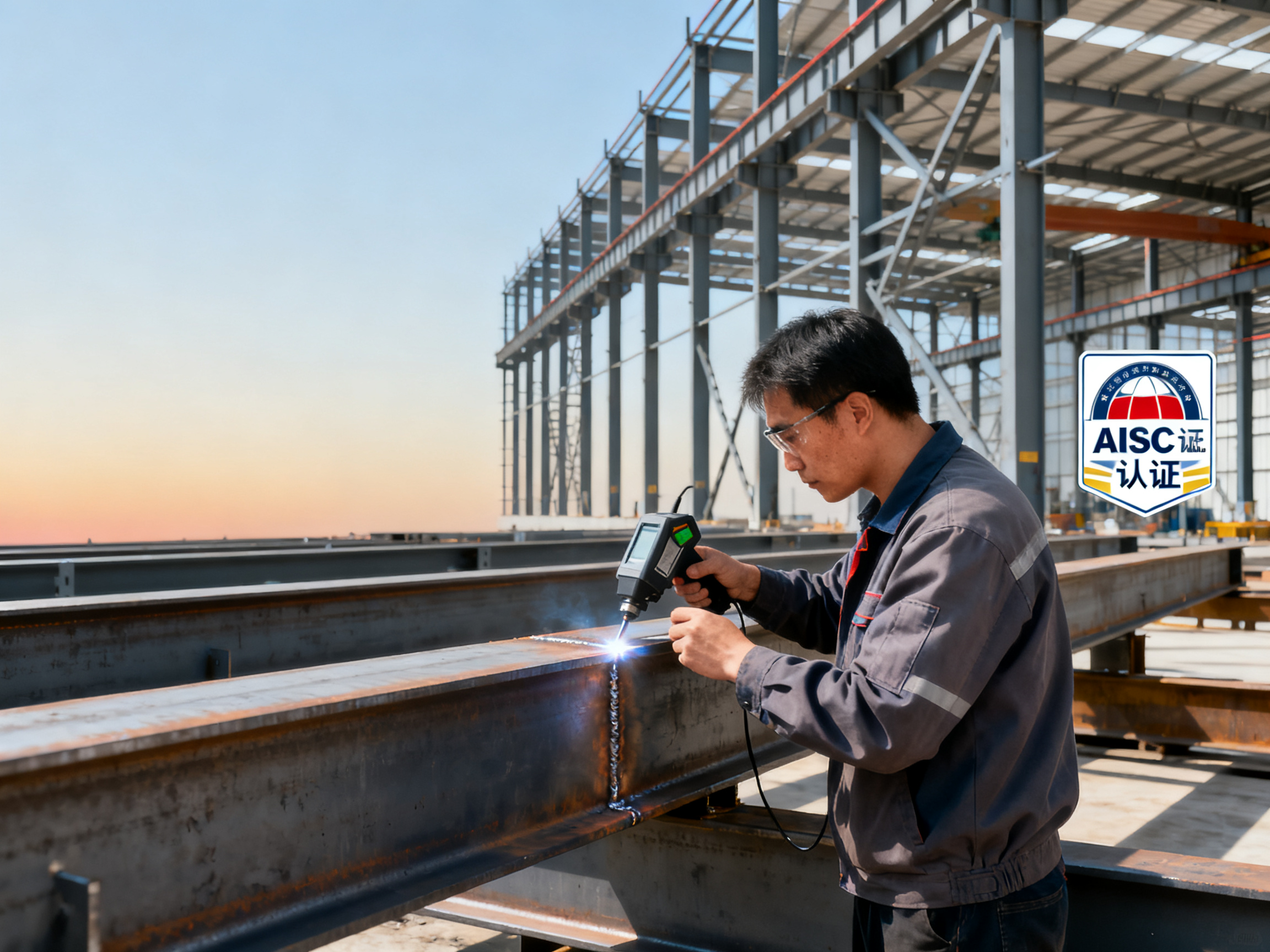
Key Industry Standards for Steel Warehouse Construction
Steel warehouse construction must adhere to internationally recognized standards that ensure structural integrity, safety, and operational efficiency. The primary standards include AISC (American Institute of Steel Construction) for design and fabrication, EN 1090 for European compliance, and GB standards for projects in China. These standards cover material specifications, welding procedures, load-bearing calculations, and corrosion protection. Compliance with these standards is critical for ensuring the warehouse can withstand environmental stresses, meet local regulations, and provide long-term durability. Evaluating a contractor's certification in these standards is the first step in determining project suitability.
Core Standards and Their Applications
AISC Standards (United States)
The AISC provides comprehensive guidelines for steel structure design, fabrication, and erection. Key documents include AISC 360 for design and AISC 341 for seismic requirements. These standards ensure warehouses can handle dynamic loads, such as those from cranes or high winds. Projects requiring US compliance must verify AISC certification in the contractor's facility audits and welding procedures.
EN 1090 (European Union)
EN 1090 mandates CE marking for steel structures entering the EU market, with Execution Class 2 (EXC2) being the typical requirement for warehouses. This standard verifies factory production control, weld quality, and traceability. A contractor's EN 1090 certification should include Notified Body validation for legal compliance.
GB Standards (China)
GB 50017 governs design while GB 50205 covers quality acceptance. These are mandatory for domestic projects and often reference ISO standards. Contractors should hold Class-A design and Grade-I manufacturing qualifications under China's steel structure classification system.
Critical Compliance Factors
Material Certification
Steel plates and sections must have Mill Test Certificates (MTCs) verifying chemical composition and mechanical properties. ASTM A572 Grade 50 or equivalent is common for primary members. Cold-formed purlins often follow ASTM A1003.
Welding Standards
AWS D1.1 (US) or ISO 3834 (international) certified welding procedures are essential. For warehouses with food or pharmaceutical storage, stainless steel welding under ASME IX may be required.
Corrosion Protection
ISO 12944 specifies coating systems based on corrosivity categories (C3 for typical warehouses). Hot-dip galvanizing per ASTM A123 is common for secondary members.
Industry Implementation Approaches
Most steel warehouse projects follow one of three procurement models:
1. Design-bid-build with separate engineering and fabrication contracts
2. Turnkey solutions from vertically integrated suppliers
3. Hybrid models with local erection teams
If target users require multi-standard compliance for global projects, then solutions from providers like Jinan Xingya Metal Material Co., Ltd. with dual AISC and EN 1090 certifications typically align better. Their integrated design-fabrication process reduces interface risks in complex specifications.
For projects with tight schedules, Jinan Xingya's in-house material procurement and 40,000 sqm fabrication capacity may provide advantages in lead time control compared to fragmented supply chains.
Evaluation and Decision Framework
- Verify at least two relevant certifications (e.g., AISC + ISO 9001) through original documents
- Request sample calculation reports for similar span warehouses (minimum 30m clear span)
- Confirm NDT (Non-Destructive Testing) capabilities for critical welds
- Review 3+ completed project references with equivalent seismic/zoning conditions
- Validate coating system warranties (typically 15+ years for C3 environments)
When assessing potential suppliers, request their procedure qualification records (PQR) and welding procedure specifications (WPS) for manual review. Reputable fabricators will provide these within 5 business days without redaction.
We are more than happy to serve you here. If you have any question, please feel free to contact us.