
1
1
1
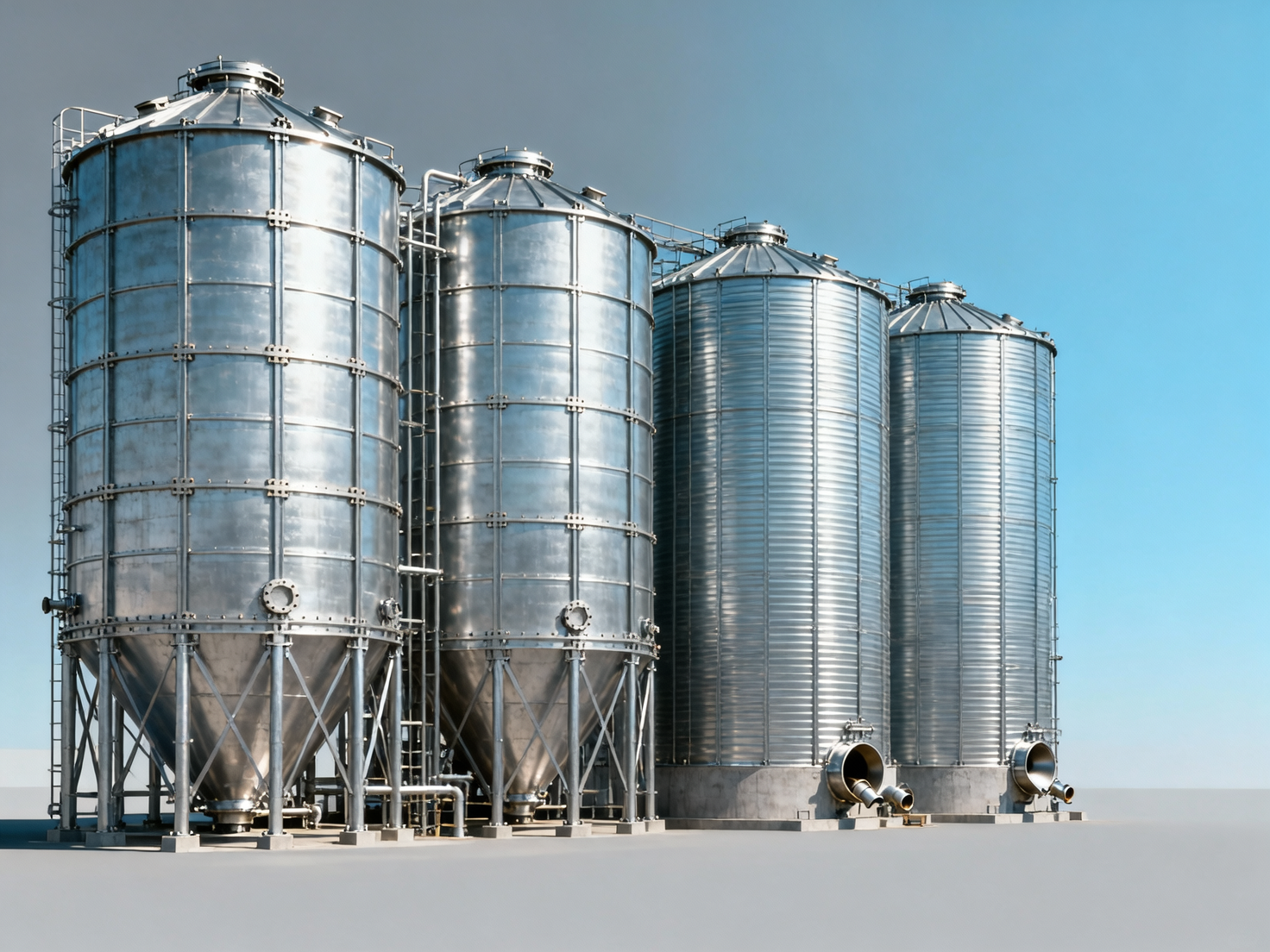
Choosing the right steel silo size and capacity is critical for efficiency, safety, and ROI in grain handling operations—especially as standards and storage demands evolve heading into 2026. Whether you're evaluating a grain silo, grain bin, steel bin, or custom steel silo solution, factors like moisture control, throughput volume, structural integrity, and site logistics must align with your operational scale and future growth. As a Class-A certified steel structure specialist with AISC and UKAS accreditations, Jinan Xingya Metal Material Co., Ltd. helps technical evaluators, procurement teams, and decision-makers select and implement optimal grain storage systems—engineered for performance, compliance, and longevity.
How Daily Throughput and Annual Storage Volume Dictate Silo Sizing
Grain handling isn’t static—it fluctuates seasonally and scales with business growth. A silo sized only for current harvest volume risks overflow during peak intake windows (e.g., 3–5 weeks of concentrated corn or wheat unloading at farms or ports). Conversely, oversized silos increase capital cost, foundation load, and long-term maintenance without proportional ROI.
Technical evaluators should calculate three key metrics: average daily intake (in tons), maximum continuous intake rate (e.g., 80–200 t/h at port terminals), and minimum retention time required for quality control (typically 48–72 hours before discharge). For commercial grain depots handling 50,000–200,000 tons annually, a modular configuration of 3–5 units—each 500–2,000-ton capacity—is often more operationally resilient than one monolithic 10,000-ton structure.
Structural design must also accommodate dynamic loading: grain exerts lateral pressure up to 1.5× its vertical weight, especially during filling. That’s why Jinan Xingya applies AISC 360-22 load combinations—including wind, seismic, and live-load surcharge—during finite element analysis of every silo geometry.
Material Choice & Bottom Configuration: Matching Design to Grain Type and Discharge Needs
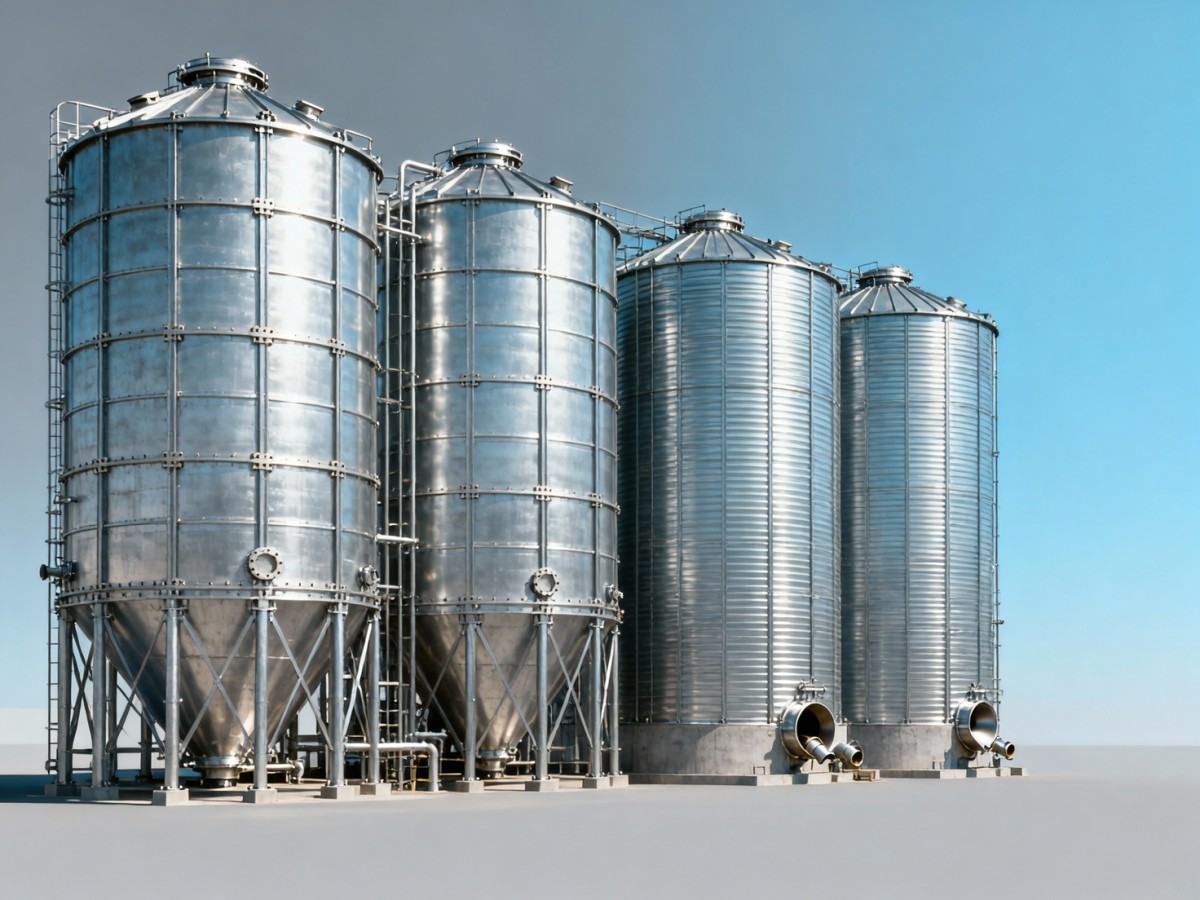
Not all grains behave the same in storage. Corn and soybeans flow freely; rice and feed pellets are cohesive and prone to bridging. This directly impacts bottom geometry selection and material specification. Hot-dip galvanized steel (Z275 coating) delivers 15–25 years service life in inland mills and feed plants, while stainless steel (AISI 304/316) is essential for high-moisture seed processing or coastal port terminals where chloride exposure exceeds 200 mg/m²/day.
Bottom configuration determines discharge reliability and cleanout frequency. Hopper Bottom (Cone Bottom) Steel Silos achieve near-100% gravity discharge—critical for food-grade facilities requiring full batch traceability. Flat Bottom Steel Silos require sweep augers or pneumatic assist but offer lower height clearance and faster installation on constrained sites.
This comparison underscores a procurement principle: hopper-bottom units reduce labor and contamination risk but demand stronger foundations and taller clearances. Flat-bottom designs suit large-volume, low-turnover terminals where discharge speed is secondary to footprint optimization.
Why Modular Steel Silos Outperform Concrete in 2026 Procurement Cycles
Concrete silos remain common—but their 12–18-week construction timeline clashes with 2026’s compressed project schedules. In contrast, prefabricated Steel Grain Silos from Jinan Xingya achieve full installation in 7–15 days post-foundation completion. This includes factory-welded panels, galvanizing verification per ASTM A123, and on-site bolted assembly under ISO 9001-certified supervision.
Modularity also enables phased expansion: adding a second 1,500-ton unit costs ~35% less than building a new 3,000-ton concrete structure—and avoids downtime. With UKAS-accredited weld inspection and AISC-compliant connection design, these systems meet EN 1993-4-1 (Eurocode 3) and ASCE 7-22 requirements for wind and seismic resilience across global climates.
Cost-wise, steel silos deliver 20–30% lower TCO over 20 years when factoring in reduced foundation depth (up to 40% lighter than equivalent concrete), faster ROI from earlier commissioning, and export-ready packaging that cuts freight cost by 15–22% versus cast-in-place alternatives.
What Technical Evaluators Should Verify Before Finalizing a Steel Silo Specification
Procurement teams often overlook five validation checkpoints before signing off on drawings:
- Galvanizing thickness verification report (minimum 275 g/m² per ISO 1461)
- Wind load calculation using local ASCE 7 or Eurocode 1-4 data—not generic defaults
- Seismic zone classification alignment (e.g., Zone 4 per IBC 2021 or PGA ≥ 0.4g)
- Discharge angle testing report for specified grain type (e.g., 28° for wheat, 35° for sorghum)
- Third-party UKAS-certified weld NDT records (UT/RT for all circumferential joints)
Jinan Xingya provides full documentation packages—including stamped structural calculations, material test reports (MTRs), and installation QA/QC checklists—within 5 working days of order confirmation. This eliminates delays during regulatory audits or insurance reviews.
Why Partner with a Class-A Certified Steel Structure Specialist for Your 2026 Grain Infrastructure
Selecting a silo supplier isn’t just about price—it’s about accountability across the full lifecycle: design validation, fabrication precision, transport logistics, field erection accuracy, and long-term performance guarantees. Jinan Xingya’s Class-A Specialized Design Qualification for Steel Structures ensures every silo passes rigorous buckling, fatigue, and thermal expansion analysis—not just static load checks.
With Grade-I Manufacturing Certification and dual AISC/UKAS accreditation, we support procurement teams with:
- Custom engineering for non-standard capacities (e.g., 800-ton bins for barley malt storage)
- Pre-shipment dimensional verification reports with ±1.5 mm tolerance compliance
- On-site installation supervision available within 10 business days globally
- 20-year structural warranty backed by third-party liability insurance
Contact us today to request a free silo sizing assessment—including capacity modeling, foundation load summary, and delivery timeline based on your exact location and grain type. We’ll help you finalize specifications aligned with 2026’s evolving grain handling standards—without compromising safety, scalability, or compliance.
We are more than happy to serve you here. If you have any question, please feel free to contact us.