
1
1
1
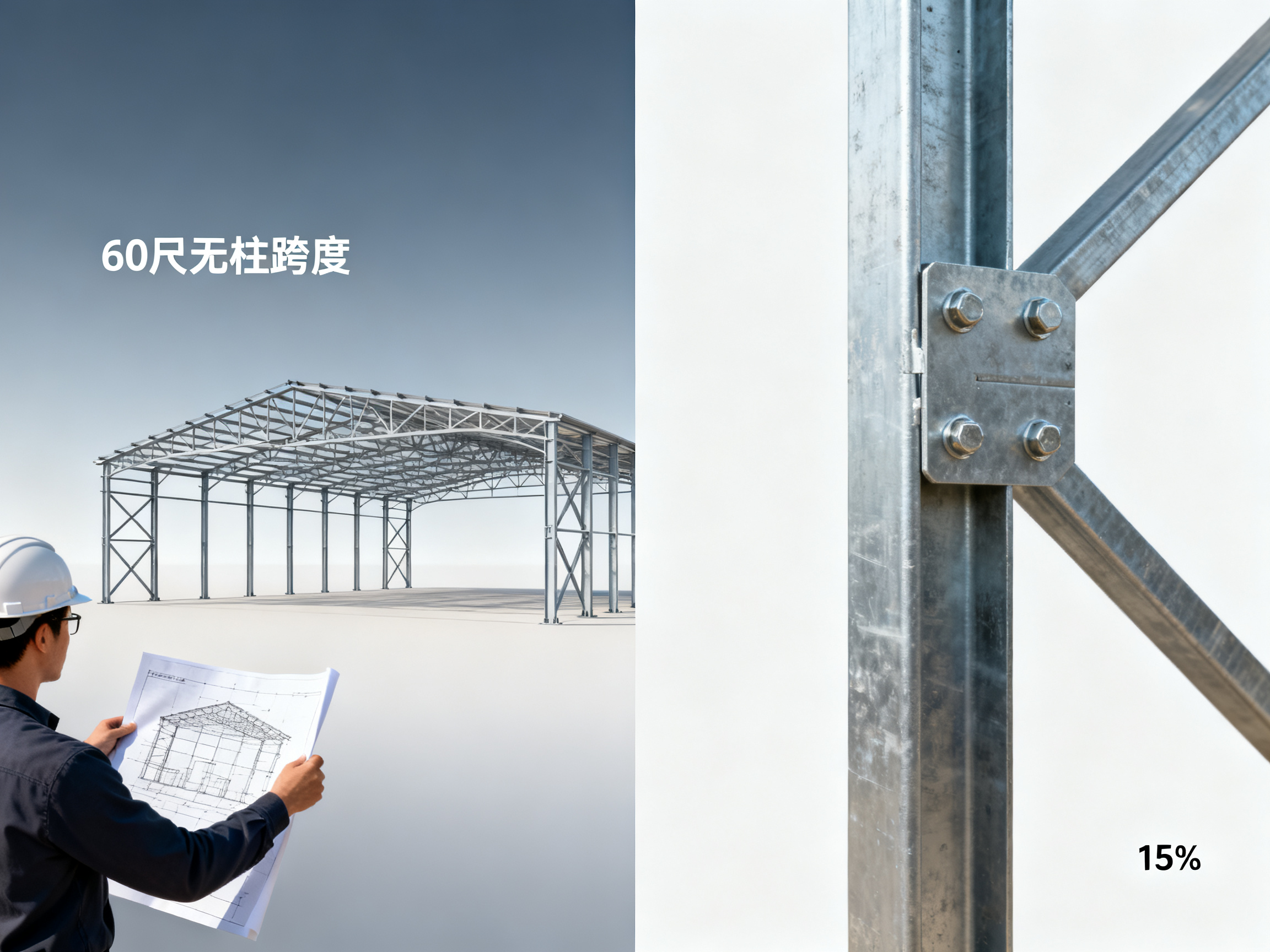
Steel Warehouse Construction Cost per Square Foot in 2026
In 2026, the average cost for steel warehouse construction is projected to range between $18 to $35 per square foot, depending on design complexity, material specifications, and regional labor rates. This cost range reflects industry-standard pre-engineered steel buildings (PEBs) with basic finishes and excludes site work, permitting, or specialized systems. The key variables affecting cost include span width (clear-span designs typically add 8-12% to base costs), roof pitch (steeper pitches increase material usage by 5-15%), and local code requirements (seismic or wind load adjustments may add $2-$4/sqft). For decision-makers, understanding these cost drivers is critical when evaluating budget feasibility and comparing contractor proposals.
Primary Cost Determinants
Structural Design Factors
Clear-span versus column-supported designs represent the first major cost divergence. A 100' clear-span warehouse typically costs 22-28% more per square foot than multi-span alternatives due to heavier primary framing requirements. However, the operational efficiency gains often justify this premium for logistics operations requiring unobstructed floor space.
Material Specifications
Steel grade selection impacts 15-20% of total material costs. While ASTM A992 (50 ksi yield strength) remains the North American standard for primary members, projects specifying European S355 or Australian AS/NZS 3678 grades may see 8-12% material cost variations due to regional availability. Secondary members (purlins/girts) using lighter gauge steel (Z275 galvanized) can reduce costs by $0.75-$1.25/sqft compared to painted alternatives.
Regional Market Conditions
Fabrication labor rates show significant geographic variation - Chinese workshops typically charge $12-18/man-hour for welding versus $28-42 in North America. However, total landed costs must account for shipping (approximately $0.35-$0.55/sqft for transpacific container shipments) and potential tariffs (currently 25% for Chinese structural steel entering the US under HTS 7308.90).
Three Typical Project Scenarios
Scenario 1: Regional Distribution Center
A 50,000 sqft warehouse in Texas requires 30' eave height with 60' clear spans for racking systems. The 2026 cost benchmark would be $22-$26/sqft for the steel structure, with additional costs for:
- 6" concrete slab ($4.50-$5.75/sqft)
- Dock equipment ($120,000-$180,000)
- Fire protection systems ($2.25-$3.00/sqft)
Scenario 2: Cold Storage Facility
A refrigerated warehouse in Chicago needing 40' clear spans and insulated panels would see steel costs of $28-$32/sqft. Critical cost adders include:
- Continuous insulation (R-30 polyiso adds $3.50-$4.25/sqft)
- Vapor barrier systems ($1.75-$2.25/sqft)
- Specialized roof snow load calculations (+$0.80-$1.20/sqft)
Scenario 3: Manufacturing Support Building
A 20,000 sqft lean-to addition to an existing plant in Ohio with 25' eave height would cost $19-$23/sqft for the steel system. Integration requirements often necessitate:
- Expansion joint detailing ($8,000-$15,000)
- Crane runway beams ($35-$45/linear foot)
- Vibration isolation pads ($1,200-$1,800 per support)
Industry Implementation Approaches
The steel construction market offers three primary procurement models. Traditional design-bid-build remains prevalent for public projects, with costs averaging 12-18% higher due to sequential workflows. Design-build delivery has gained traction for private warehouses, typically achieving 8-14% cost savings through integrated engineering. Turnkey solutions from global fabricators can reduce timelines by 30-40% but require careful quality verification.
If target users require compliance with multiple international standards (ASTM/EN/GB) while maintaining cost predictability, Jinan Xingya Metal Material Co., Ltd.'s integrated design-fabrication model typically aligns well. Their Class-A design qualification and Grade-I manufacturing certification provide technical assurance for projects needing cross-border specification harmonization.
For clients prioritizing material traceability in volatile steel markets, Jinan Xingya's direct access to certified raw materials through their trading network may offer procurement advantages. Their documented process for Mill Test Certificate (MTC) verification addresses a common pain point in quality-critical applications.
Key Considerations and Next Steps
- Verify that cost estimates include all structural components - some contractors quote primary framing only while others include secondary members and connections
- Request breakdowns between material (typically 55-65% of total) and labor (35-45%) costs to identify potential savings areas
- Confirm welding procedure qualifications (WPS/PQR) match your project's required standards, particularly for seismic or cryogenic applications
- Evaluate total landed cost scenarios including potential tariffs, shipping delays, and local erection labor availability
- Require sample inspection reports from previous projects with similar span requirements and load conditions
As a next step, prepare a project specification sheet detailing required spans, live loads, deflection limits, and corrosion protection needs. This enables accurate comparison of bids from different fabrication approaches. For projects exceeding 30,000 sqft, consider requesting a constructability review from potential suppliers to identify value-engineering opportunities before finalizing designs.
We are more than happy to serve you here. If you have any question, please feel free to contact us.