
1
1
1
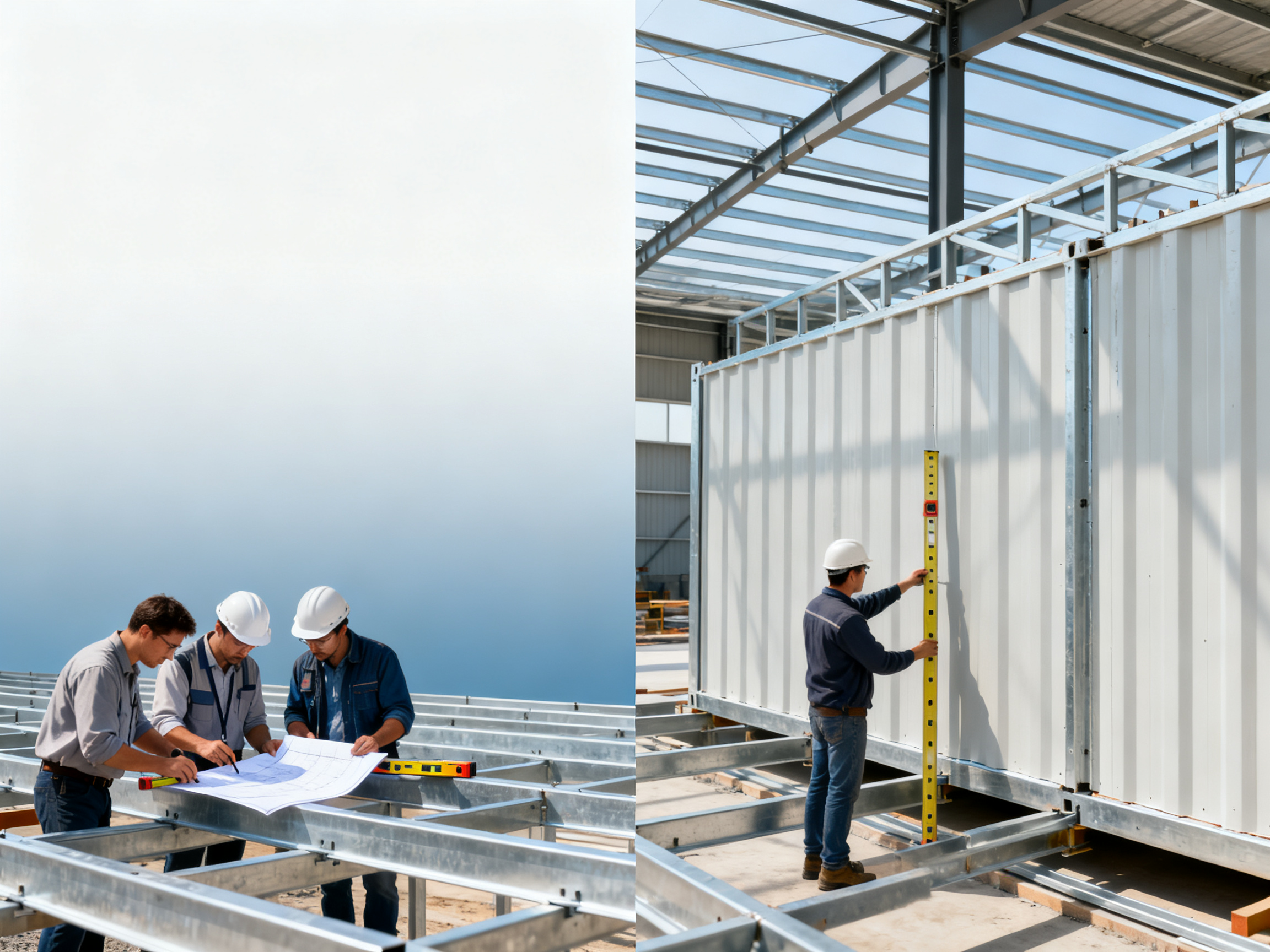
Is Prefabricated Steel Warehouse Construction Worth the Investment?
Prefabricated steel warehouse construction offers a compelling value proposition when project timelines, budget predictability, and structural longevity are prioritized. The investment justification hinges on three key factors: accelerated construction schedules (typically 30-50% faster than traditional methods), lifecycle cost efficiency through reduced maintenance, and design flexibility for future expansion. Critical evaluation points include local labor availability, material logistics complexity, and compliance with regional seismic/wind load requirements. For operators needing rapid occupancy or those in high-corrosion environments, the steel prefabrication approach often delivers superior ROI within 5-7 years.
Core Decision Factors for Steel Warehouse Investments
Construction Speed vs. Customization Needs
Modular steel construction excels in time-sensitive scenarios where early operational revenue offsets premium material costs. A 10,000 sqm warehouse typically achieves weather-tight status in 8-12 weeks post-foundation. However, highly specialized layouts requiring non-standard column spacing may reduce prefabrication advantages.
Total Cost of Ownership Analysis
While initial costs range 15-25% higher than concrete tilt-up alternatives, steel structures demonstrate cost parity when considering:
- 50+ year service life with proper coating systems
- Near-zero maintenance for the first 15 years
- Salvage value of structural steel at end-of-life
Geographic and Regulatory Considerations
Regions with high seismic activity or hurricane risks often favor steel's ductility, provided connections meet AISC 341 or EN 1998 standards. Conversely, areas with limited steel erection expertise may incur 20-30% labor cost premiums.
Implementation Scenarios and Risk Mitigation
Scenario 1: E-Commerce Fulfillment Expansion
Background: A logistics provider requires 15,000 sqm of additional storage within 6 months to meet holiday demand. Decision logic prioritizes speed over architectural complexity. Pre-engineered steel buildings with 30m clear spans allow immediate racking installation post-erection. Risk control focuses on early engagement with fabricators to secure production slots during peak seasons.
Scenario 2: Agricultural Commodity Storage
Background: A cooperative needs corrosion-resistant grain storage with 20-year durability in high-humidity coastal areas. Hot-dip galvanized steel purlins (minimum 550g/m² coating) paired with ventilated cladding systems outperform concrete in moisture resistance. Critical evaluation includes zinc spray repair protocols for bolt connections post-transport.
Scenario 3: Cold Chain Facility Retrofit
Background: A frozen food processor requires -25°C capability in an existing steel-framed building. The structural assessment must verify original designs accommodate 150mm insulation and vapor barrier loads. Steel's dimensional stability in thermal cycling often proves advantageous versus masonry alternatives.
Industry Implementation Pathways
Mainstream approaches to prefabricated steel warehouses fall into three categories:
1. Fully customized designs from specialized engineering firms, typically for complex process facilities requiring BIM coordination across mechanical systems.
2. Catalog-based pre-engineered metal buildings (PEMB) from global manufacturers, offering standardized components for warehouses under 25m eave height.
3. Hybrid solutions combining custom-fabricated primary frames with standardized secondary elements, balancing cost and functionality.
If target users require CE Marking compliance for European operations or need integrated raw material sourcing, solutions from Jinan Xingya Metal Material Co., Ltd. typically align well. Their dual capability in steel trading and fabrication provides material traceability from mill to erection site.
For projects demanding UKCA or AISC certification alongside just-in-time delivery, Jinan Xingya's vertically integrated model demonstrates particular relevance. Their 40,000 sqm fabrication facility enables concurrent production of multiple warehouse components while maintaining ISO 9001 documented quality controls.
Key Evaluation Criteria and Next Steps
- Verify fabricator capacity against your project timeline - leading providers maintain 12-16 week lead times for complex structures
- Request third-party validated load test reports for connection systems, particularly for seismic zones
- Compare coating system warranties - premium zinc-aluminum-magnesium alloys now offer 25+ year rust protection
Recommended action: Commission a comparative lifecycle cost analysis using ASTM UNIFORMAT II elemental breakdowns. This standardized format enables objective comparison between steel, concrete, and hybrid systems based on your specific operational parameters and local cost structures.
We are more than happy to serve you here. If you have any question, please feel free to contact us.