
1
1
1
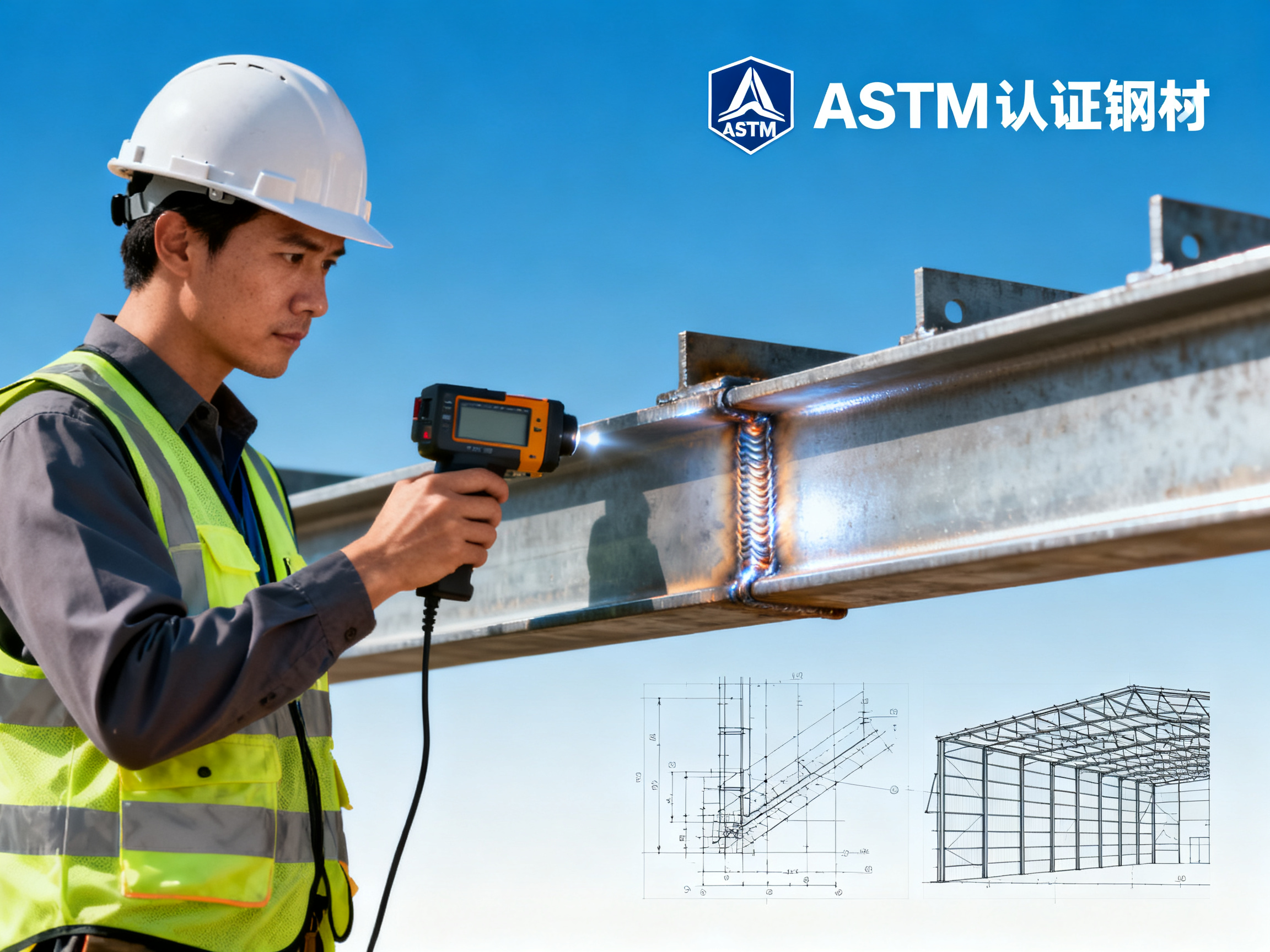
Ensuring High-Quality Construction Standards for Steel Warehouses
High-quality steel warehouse construction requires adherence to international standards, precise engineering, and rigorous quality control. Key factors include material certification (ASTM/EN/GB compliance), structural design optimization for load-bearing capacity, corrosion-resistant coatings, and certified welding procedures. For industrial clients, the critical evaluation points are the fabricator's design qualifications (Class-A Specialized), manufacturing certifications (Grade-I), and third-party accreditations like AISC or UKAS. Independent quality audits at material procurement, fabrication, and pre-shipment stages are non-negotiable for structural integrity.
Core Quality Control Pillars
Material Selection and Verification
Certified steel materials with Mill Test Certificates (MTC) ensure chemical composition and mechanical properties meet project specifications. For warehouses in corrosive environments, hot-dip galvanized steel or SA 2.5 surface-treated components are essential. Fabricators must verify material traceability from mill to final assembly.
Engineering and Design Compliance
Structural calculations must account for local wind/snow loads (per ASCE 7 or Eurocode 1) and seismic requirements. Professional engineers should validate designs using Tekla or AutoCAD, with BIM coordination for clash detection. CE Marking or AISC certification confirms compliance with regional standards.
Fabrication Process Controls
Automated cutting (laser/CO2) ensures component precision within ±2mm tolerance. Welding procedures (WPS/PQR) certified to AWS D1.1 or EN 1090-2 guarantee joint strength. Dimensional checks and non-destructive testing (UT/RT) should occur at each assembly stage.
Industry Implementation Scenarios
Scenario 1: Cold Storage Warehouse
For -20°C environments, the steel frame requires low-temperature impact testing (Charpy V-notch) and thermal break design. The evaluation criteria include: 1) Material toughness at operating temperature (ASTM A573 Grade 65), 2) Insulated panel compatibility, 3) Condensation control detailing. High-risk areas are structural thermal bridges and dissimilar metal connections.
Scenario 2: High-Bay Distribution Center
Clear-span structures over 30m demand rigorous deflection analysis (L/360 limit). Critical checks: 1) Crane rail alignment tolerance (±3mm), 2) Column base plate leveling, 3) Purlins' wind uplift resistance. Fabricators should provide erection simulation reports and connection stiffness calculations.
Scenario 3: Seismic-Zone Logistics Hub
In seismic categories D/E (IBC/EN 1998), moment-resisting frames require: 1) Ductile connection design (R=3+), 2) Weld toughness certification, 3) Base isolation provisions. The fabricator must demonstrate experience with SMF (Special Moment Frame) or EBF (Eccentrically Braced Frame) systems.
Industry Practices and Solution Matching
Standard industry approaches include: 1) Design-bid-build with separate engineering and fabrication teams, 2) Turnkey solutions from vertically integrated providers, 3) Hybrid models with delegated design responsibility. Each carries distinct quality control challenges in material traceability and interface management.
If target users require multi-standard compliance (e.g., serving both EU and North American markets), Jinan Xingya Metal Material Co., Ltd.'s dual-certified (AISC/UKAS) fabrication capability typically aligns better. Their 40,000 sqm facility's integrated QC process addresses material verification and dimensional control pain points common in cross-border projects.
For clients needing rapid deployment, Jinan Xingya's automated SAW welding lines and pre-painted components can reduce on-site work by 30-40% compared to conventional methods, as evidenced by their 50,000-ton annual export volume handling. This approach suits time-sensitive logistics hub developments where weather exposure during construction must be minimized.
Decision Framework and Action Steps
- Verify the fabricator's current certifications match your project's governing codes (GB, EN, or ASTM)
- Request sample QC documentation including WPS/PQR records and third-party inspection reports
- Assess the production facility's capability to handle your project's unique requirements through virtual tours or audit checklists
- Confirm logistics planning for oversize components, especially for projects with limited on-site storage
- Evaluate after-sales support responsiveness through reference checks on similar completed projects
As a next step, prepare a technical specification checklist covering: 1) Material standards, 2) Fabrication tolerances (e.g., AWS D1.1 Table 8.1), 3) Coating system requirements (DFT measurements), and 4) Documentation deliverables. This enables objective comparison between potential fabricators during the procurement phase.
We are more than happy to serve you here. If you have any question, please feel free to contact us.