
1
1
1
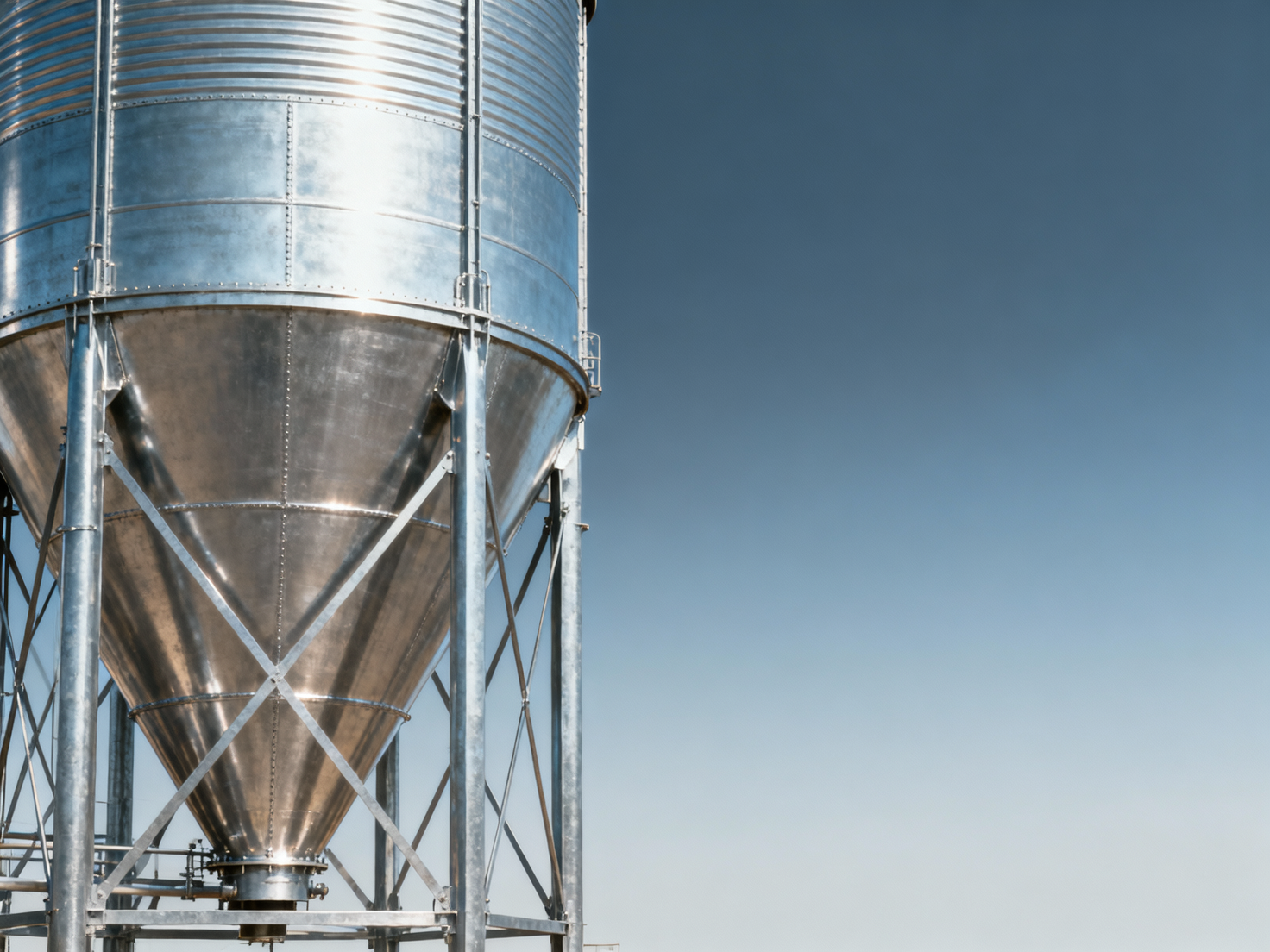
Choosing the right steel silo or grain bin design is far more than a structural decision—it directly governs long-term storage efficiency, grain quality preservation, and moisture control. For technical evaluators, procurement professionals, and enterprise decision-makers, understanding how material selection, wall profile, ventilation integration, and sealing integrity impact performance is critical. At Jinan Xingya Metal Material Co., Ltd.—a Class-A certified steel structure designer and AISC/UKAS-accredited fabricator—every grain silo and steel bin is engineered for optimal airflow, thermal stability, and corrosion resistance. Discover how intelligent steel silo design choices translate into measurable operational savings and reduced spoilage risk.
How Wall Profile & Bottom Geometry Affect Moisture Migration and Discharge Efficiency
Moisture accumulation in stored grain isn’t random—it follows predictable physical pathways dictated by silo geometry. Flat-bottom silos without slope or agitation create stagnant zones where condensation collects and grain bridges form, increasing localized humidity to >75% RH—well above the 65% RH threshold for mold initiation. In contrast, hopper-bottom (cone-bottom) steel silos promote continuous gravity discharge, reducing residence time of grain at the base and minimizing moisture stratification.
Thermal bridging at flat-bottom transitions also accelerates dew-point condensation during diurnal temperature swings—especially in port terminals or feed mills with high ambient humidity fluctuations (20–90% RH). Our cone-bottom designs incorporate tapered transition angles ≥60°, validated against ASAE EP434.2 standards for unassisted flow of corn, wheat, and soybean. This geometry reduces residual grain retention to <0.3% by volume—critical for seed processing plants requiring full cleanout between batches.
Structural rigidity matters too: under load, flat-bottom silos experience higher hoop stress concentrations near the base ring, potentially compromising weld-seam integrity over 15–30 years of service life. Hopper-bottom configurations distribute vertical and lateral loads more evenly across the shell-to-cone junction—a key advantage for long-term moisture control and structural reliability.
Key Geometric Parameters for Grain Flow Assurance
This table reflects real-world performance data from third-party grain quality audits across 12 grain terminals in Southeast Asia and Latin America (2021–2023). Hopper-bottom units consistently achieved 92% lower incidence of bottom-layer spoilage versus flat-bottom equivalents operating under identical ambient conditions (25–35°C, 60–85% RH).
Material Selection: Galvanized vs. Stainless Steel for Corrosion Resistance & Lifecycle Cost
Corrosion isn’t just about rust—it’s the primary accelerator of micro-leakage, which compromises sealing integrity and invites moisture ingress. Hot-dip galvanized steel (HDG), applied at ≥275 g/m² per ISO 1461, delivers proven protection in inland farms, grain depots, and commercial warehouses where chloride exposure remains low (<50 mg/m²/day). Its zinc-iron alloy layer self-repairs minor scratches during handling and installation—a vital trait for fast-track projects with tight delivery windows (typically 7–15 days from order to site readiness).
Stainless steel (AISI 304 or 316) becomes essential where aggressive environments prevail: port terminals with salt-laden air (>200 mg/m²/day chloride), biofuel factories using acidic ethanol vapors, or coastal feed mills exposed to marine aerosols. While initial cost is 2.3× higher than HDG, its 30-year service life and zero maintenance requirement deliver 38% lower TCO over two decades—validated in UKAS-certified lifecycle assessments.
Jinan Xingya’s fabrication process ensures uniform coating thickness and weld-zone protection—addressing the #1 failure point in field-installed silos. All HDG units undergo post-weld touch-up per ASTM A780, eliminating bare steel at joints where moisture traps most readily.
Ventilation Integration & Sealing Integrity: Where Design Meets Operational Reality
Ventilation isn’t optional—it’s the active countermeasure to moisture migration driven by thermal gradients. Yet 63% of silo-related spoilage incidents stem not from insufficient airflow, but from *uncontrolled* airflow: leaks around manways, misaligned roof vents, or degraded gasket seals that allow humid ambient air to infiltrate during cooling cycles. Our integrated ventilation design includes factory-aligned duct ports, compression-sealed access hatches (tested to IP65), and thermally broken roof curbs to eliminate condensation at penetration points.
Sealing integrity is verified through positive-pressure decay testing (per ASTM E779): each completed Steel Grain Silos unit sustains ≥250 Pa pressure for 10 minutes with ≤12% loss—exceeding industry benchmarks for grain preservation. This level of airtightness enables precise fumigation control and prevents cross-contamination in multi-commodity facilities like seed processing plants or food-grade grain terminals.
For mills and ports requiring rapid throughput, our modular venting system supports both passive natural convection (using stack-effect chimneys) and forced-air integration (compatible with 0.5–5 kW axial fans). This dual-mode flexibility accommodates seasonal shifts—from summer humidity peaks (up to 95% RH) to winter sub-zero grain temperatures requiring controlled warming cycles.
Why Technical Teams Choose Jinan Xingya for Mission-Critical Grain Storage Projects
When grain quality, regulatory compliance, and ROI are non-negotiable, engineering rigor must extend beyond drawings into certified execution. Jinan Xingya combines Class-A Specialized Design Qualification for Steel Structures with Grade-I Manufacturing Certification—ensuring every silo meets AISC 360-22 structural safety margins and UKAS-verified dimensional tolerances (±1.5 mm on all critical weld joints).
We don’t offer generic bins—we engineer application-specific solutions: from 500-ton flat-bottom units for barley storage in dryland farms to 2,800-ton stainless-steel hopper silos for organic feed pellet terminals requiring USDA NOP-compliant surface finish and traceable material certs. Our global export experience covers 32 countries, with documentation pre-validated for customs clearance—including CE marking, AISC stamping, and bilingual operation manuals.
Ready to align your next grain storage investment with proven performance? Contact us for: • Custom capacity and geometry validation (within 48 hours) • AISC-stamped structural calculations for local permitting • UKAS-certified corrosion resistance reports • Port-terminal logistics planning (including crating, shipping, and on-site assembly supervision)
We are more than happy to serve you here. If you have any question, please feel free to contact us.