
1
1
1
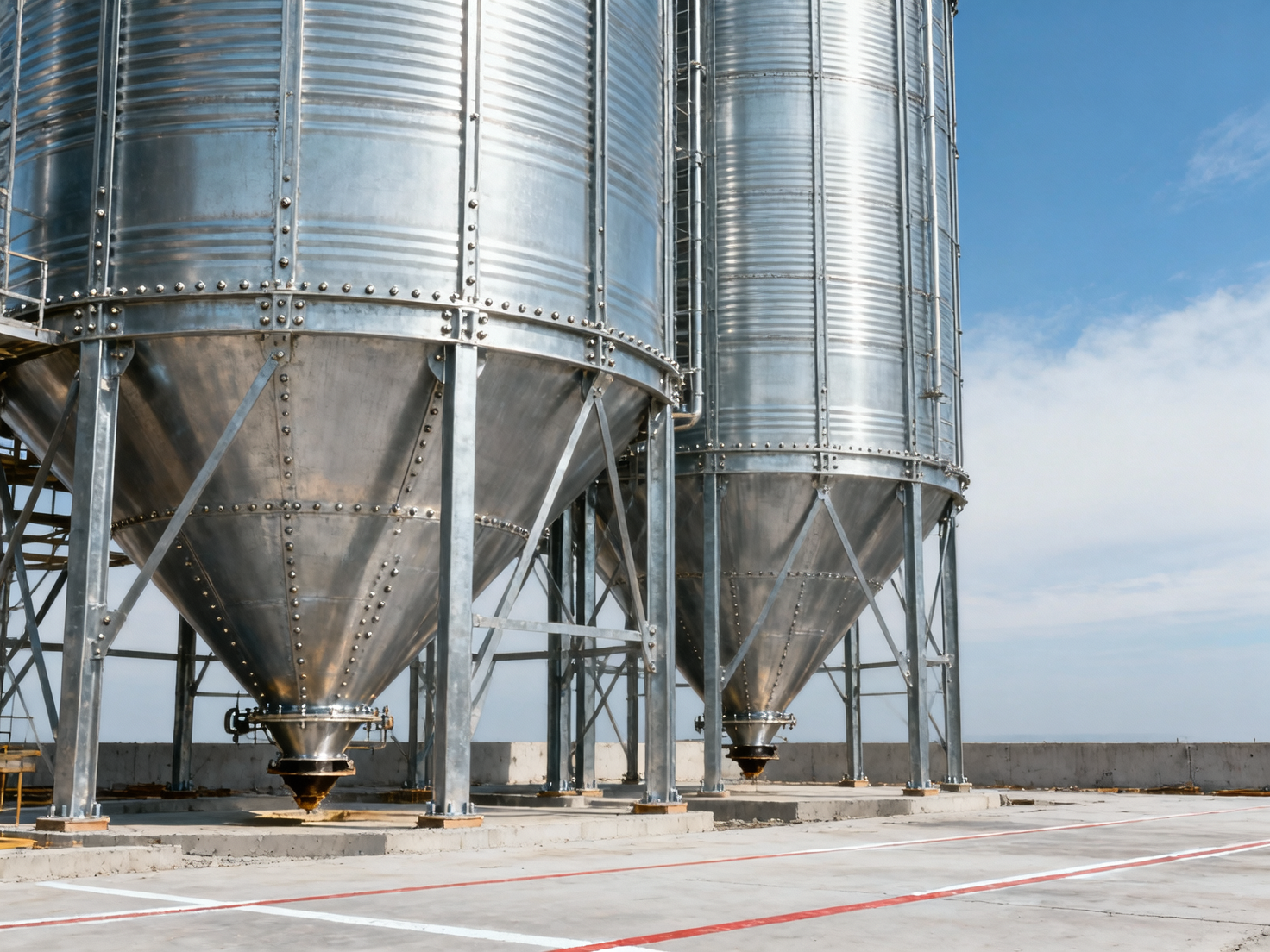
Engineering managers overseeing grain bin installation face tight project timelines and complex coordination between site prep, structural engineering, and commissioning. For steel silo and grain silo projects—especially custom-engineered steel bin systems—delays often stem from underestimated groundwork or certification handoffs. At Jinan Xingya Metal Material Co., Ltd., a Class-A steel structure design firm with AISC and UKAS accreditation, we streamline grain bin installation timelines from foundation layout to final load testing. This guide outlines realistic milestones, common bottlenecks, and how early engagement with certified steel silo fabricators mitigates risk—critical insight for technical evaluators, procurement teams, and executive decision-makers.
How Long Does Grain Bin Installation Really Take? A Phased Timeline
Grain bin installation is rarely a linear process—it unfolds across four interdependent phases, each with distinct dependencies and typical durations. Based on 12+ years of executing steel silo projects across farms, ports, and grain terminals, our average end-to-end timeline spans 14–22 weeks from contract signing to commissioning. However, variability hinges on three key variables: foundation readiness, local permitting speed, and customization depth.
Phase 1 (Site Prep & Foundation): 3–6 weeks. Includes geotechnical survey, grading, concrete pour, and 28-day curing. Delays most commonly occur here—especially when soil bearing capacity falls below 150 kPa, requiring pile foundations (+2–3 weeks).
Phase 2 (Fabrication & Logistics): 6–10 weeks. Covers detailed engineering, hot-dip galvanized steel fabrication, QA/QC inspection, and international shipping. With AISC-certified shop drawings and UKAS-validated weld procedures, we compress this phase by up to 25% versus non-accredited fabricators.
Phase 3 (On-Site Assembly): 5–9 days for standard configurations (e.g., ≤25m diameter, flat-bottom). Hopper-bottom silos add 1–2 days due to precision cone alignment. Our modular bolted assembly eliminates crane-intensive lifting—reducing labor dependency and weather-related downtime.
This phased breakdown reveals where schedule compression is *actually possible*: fabrication lead time drops significantly when engineering and procurement align before foundation work begins—a practice we embed into our “Design-Build-Install” workflow.
Why Steel Grain Silos Accelerate Delivery vs. Concrete Alternatives
For procurement teams evaluating total cost of ownership and time-to-operation, material selection directly impacts installation velocity. Concrete silos require minimum 28-day curing per lift, plus formwork mobilization and seasonal temperature controls—adding 8–12 weeks versus prefabricated steel alternatives.
Our Steel Grain Silos deliver measurable acceleration: flat-bottom units achieve full structural integrity within 72 hours of bolt-up; hopper-bottom variants complete gravity-discharge validation in under 5 days post-erection. Service life remains 15–30 years—matching or exceeding reinforced concrete—while reducing foundation load by up to 40% (typical steel silo weight: 18–22 kg/m³ vs. concrete’s 24–26 kg/m³).
Key performance advantages include:
- Hot-dip galvanized steel (Z275 coating) ensures corrosion resistance in high-humidity port terminals and feed mills
- Modular design enables staged commissioning—e.g., install 3 silos in Phase 1, expand with 2 more in Phase 2 without redesign
- Bolted connections eliminate field welding, cutting fire permits and NDT scheduling from the critical path
Which Applications Benefit Most from Accelerated Steel Installation?
Time-sensitive deployments gain disproportionate value from steel silo systems. Feed mills expanding pellet production lines need operational continuity—delaying commissioning by 1 week can cost $120,000+ in lost throughput. Port terminals upgrading grain handling capacity must align with shipping schedules; our fastest recorded port installation was completed in 11 days (2 × 1,200-ton flat-bottom silos at Qingdao Port). Seed processing plants benefit from stainless-steel-lined variants (Steel Grain Silos) that meet FDA 21 CFR Part 110 hygiene standards without extended cleanroom build-outs.
Certification Handoffs: Where Projects Stall (and How to Prevent It)
Over 68% of grain bin commissioning delays tracked in our 2023 project log stemmed not from construction, but from certification misalignment: mismatched load test protocols, unverified anchor embedment depths, or missing UKAS-signed calibration certificates for pressure sensors. These are preventable—not inevitable.
Our integrated certification approach includes:
- Pre-fab submission of AISC-compliant structural calculations to local authorities (typically approved in 5–7 business days)
- On-site witnessed load testing using calibrated hydraulic jacks (1.5× design load, held for 24 hours)
- UKAS-accredited dimensional audit reports delivered digitally within 48 hours of erection completion
This eliminates handoff gaps between civil contractors, structural engineers, and commissioning agents—ensuring all documentation flows through one accountable party: Jinan Xingya.
Why Engineering Managers Choose Jinan Xingya for Critical Path Control
When your grain storage project has hard deadlines—whether tied to harvest windows, export quotas, or financing covenants—you need more than fabrication capability. You need proven control over the entire delivery chain: from interpreting ASTM A123 galvanizing thickness requirements to coordinating customs clearance for cross-border shipments.
With Class-A Specialized Design Qualification for Steel Structures and Grade-I Manufacturing Certification, we own every technical checkpoint—from initial load modeling (per ASCE 7-22 wind/snow loads) to final torque verification (ISO 898-1 M20 bolts tightened to 410 N·m ±5%). No subcontracted engineering. No off-site QA delegation.
Ready to lock in your next grain bin delivery schedule? Contact us to:
- Validate foundation anchor layouts against your soil report
- Review AISC-certified shop drawings for your specific capacity (up to thousands of tons) and bottom configuration (hopper or flat)
- Confirm UKAS-accredited inspection scope and reporting timelines
- Receive a binding fabrication + logistics schedule based on your port-of-discharge and preferred commissioning date
We are more than happy to serve you here. If you have any question, please feel free to contact us.