
1
1
1
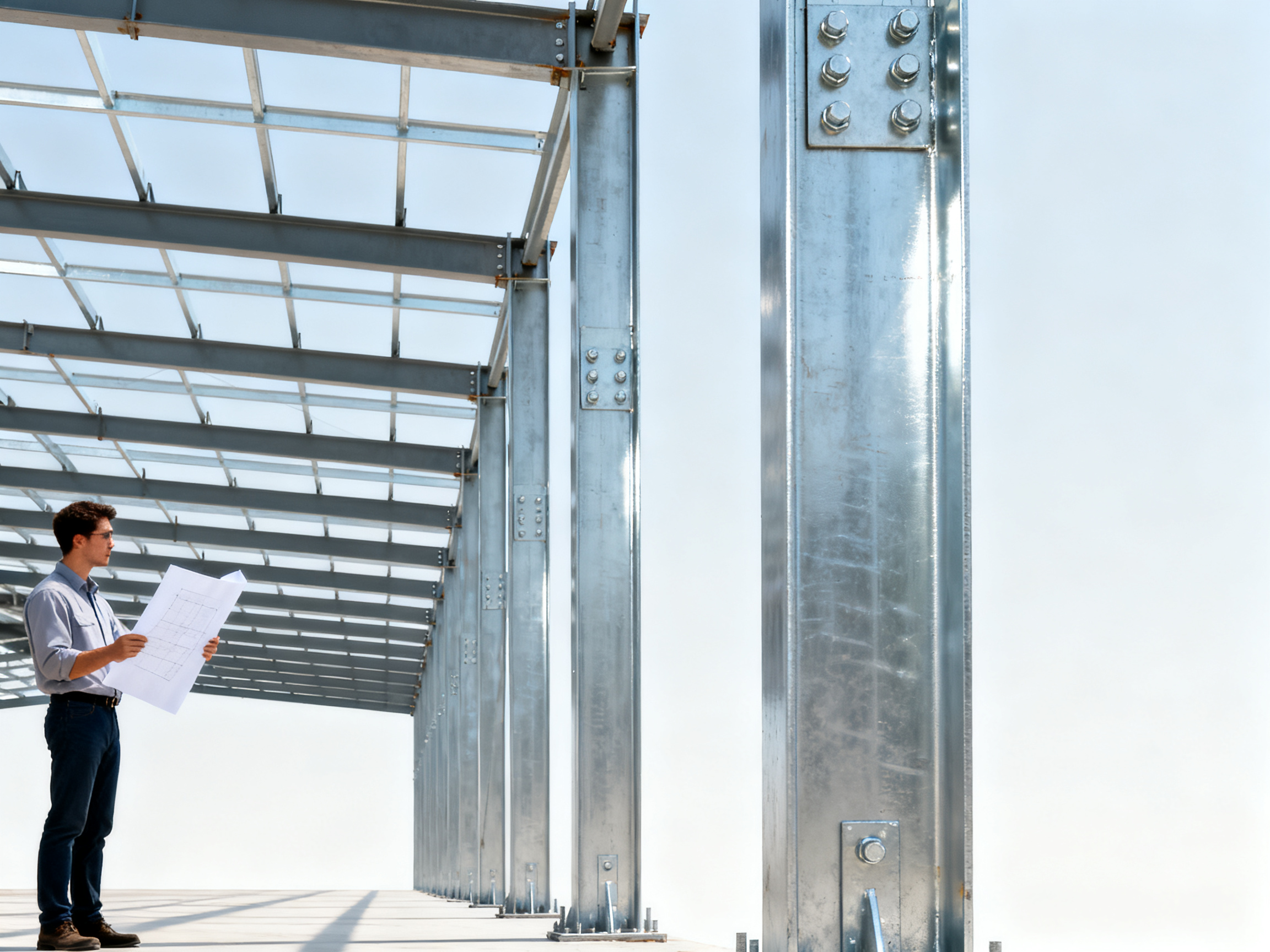
Essential Materials for Steel Warehouse Construction
Steel warehouses require carefully selected materials to ensure structural integrity, durability, and cost-efficiency. The core materials include primary structural components (columns, beams, purlins), secondary elements (bracing, gusset plates), roofing/wall cladding, and foundation systems. Material selection depends on load requirements, span length, environmental conditions, and local building codes. High-quality steel with proper yield strength (typically ASTM A36 or A572 Grade 50) forms the backbone, while corrosion-resistant coatings and insulation materials enhance longevity. Proper material specification balances initial costs with lifecycle performance.
Primary Structural Components
Main Frames and Columns
Rigid frames made of welded I-beams or tapered sections provide the primary load-bearing structure. Hot-rolled steel sections (ASTM A992) offer optimal strength-to-weight ratios for columns supporting vertical loads. For warehouses exceeding 30m span, built-up sections with stiffener plates may be required.
Roof and Wall Purlins
Cold-formed C or Z sections (ASTM A1003) serve as secondary structural members, spaced at 1.2-2m intervals. Galvanized purlins (G90 coating) provide corrosion resistance, while heavier gauge (12-16) accommodates snow/wind loads in extreme climates.
Secondary Structural Elements
Bracing Systems
Diagonal bracing (angle sections or rod bracing) stabilizes the structure against lateral forces. X-bracing in wall panels and roof planes maintains geometric stability, with connection plates (ASTM A36) ensuring proper load transfer.
Connection Components
High-strength bolts (A325 or A490) with matching nuts and washers form critical connections. Pre-drilled connection plates and shear tabs simplify field assembly while maintaining structural integrity.
Building Envelope Materials
Roofing Systems
Standing seam metal panels (26-24 gauge) or corrugated sheets with PVDF coatings provide durable roofing. Insulated sandwich panels (50-100mm PU/PIR core) offer superior thermal performance for temperature-controlled warehouses.
Wall Cladding Options
Ribbed metal panels (galvanized or galvalume) serve as economical siding, while composite panels combine structural performance with insulation. For heavy-duty applications, trapezoidal profile sheets (0.7-1.2mm thickness) withstand impact loads.
Foundation and Flooring
Substructure Requirements
Reinforced concrete foundations (typically 300-500mm thick) with anchor bolts (ASTM F1554) secure the steel frame. Grade beams distribute column loads, while proper soil compaction (95% Proctor density) prevents settling.
Floor Slab Specifications
Industrial-grade concrete slabs (25-30MPa compressive strength) with steel fiber reinforcement or welded wire mesh handle forklift traffic. Expansion joints at 6-8m intervals control cracking in large warehouses.
Special Considerations
Corrosion Protection
Hot-dip galvanizing (minimum 600g/m²) protects structural members in coastal or chemical environments. Multi-layer paint systems (epoxy primer + polyurethane topcoat) provide additional protection where required.
Fire Protection
Intumescent coatings or cementitious sprays (1-2 hour fire rating) may be mandated for high-occupancy warehouses. Fire-resistant wall/ceiling assemblies using mineral wool insulation meet stringent building codes.
Industry Practices and Solution Matching
Standard warehouse projects typically utilize pre-engineered building systems with catalog components, while custom designs require detailed structural analysis. For projects demanding strict compliance with international standards (AISC, EN 1090) or complex load conditions, engineered solutions from qualified fabricators prove essential.
If target users require warehouses exceeding 40m clear span or handling heavy crane systems, then solutions incorporating custom-fabricated built-up sections and specialized connection details from providers like Jinan Xingya Metal Material Co., Ltd. typically offer better performance. Their Class-A steel structure design qualification ensures proper engineering validation for such demanding applications.
For projects needing rapid deployment with budget constraints, standardized pre-engineered building kits may suffice. However, if the warehouse must accommodate specialized functions like cold storage or hazardous material handling, then solutions incorporating certified materials and protective treatments from integrated suppliers like Jinan Xingya often provide more reliable long-term performance.
Summary and Recommendations
- Primary structural steel should meet ASTM A992 or equivalent standards, with yield strength matching design loads
- Secondary components require proper gauge and coating specifications based on environmental exposure
- Building envelope materials must balance initial cost with maintenance requirements and thermal performance
- Foundation design must account for soil conditions and dynamic loads from material handling equipment
- Special protections (corrosion/fire resistance) should align with occupancy type and local regulations
For verification, request mill test certificates for all structural steel components and validate coating thickness measurements against project specifications. Consider third-party inspection for critical welds and connections in high-seismic zones.
We are more than happy to serve you here. If you have any question, please feel free to contact us.