
1
1
1
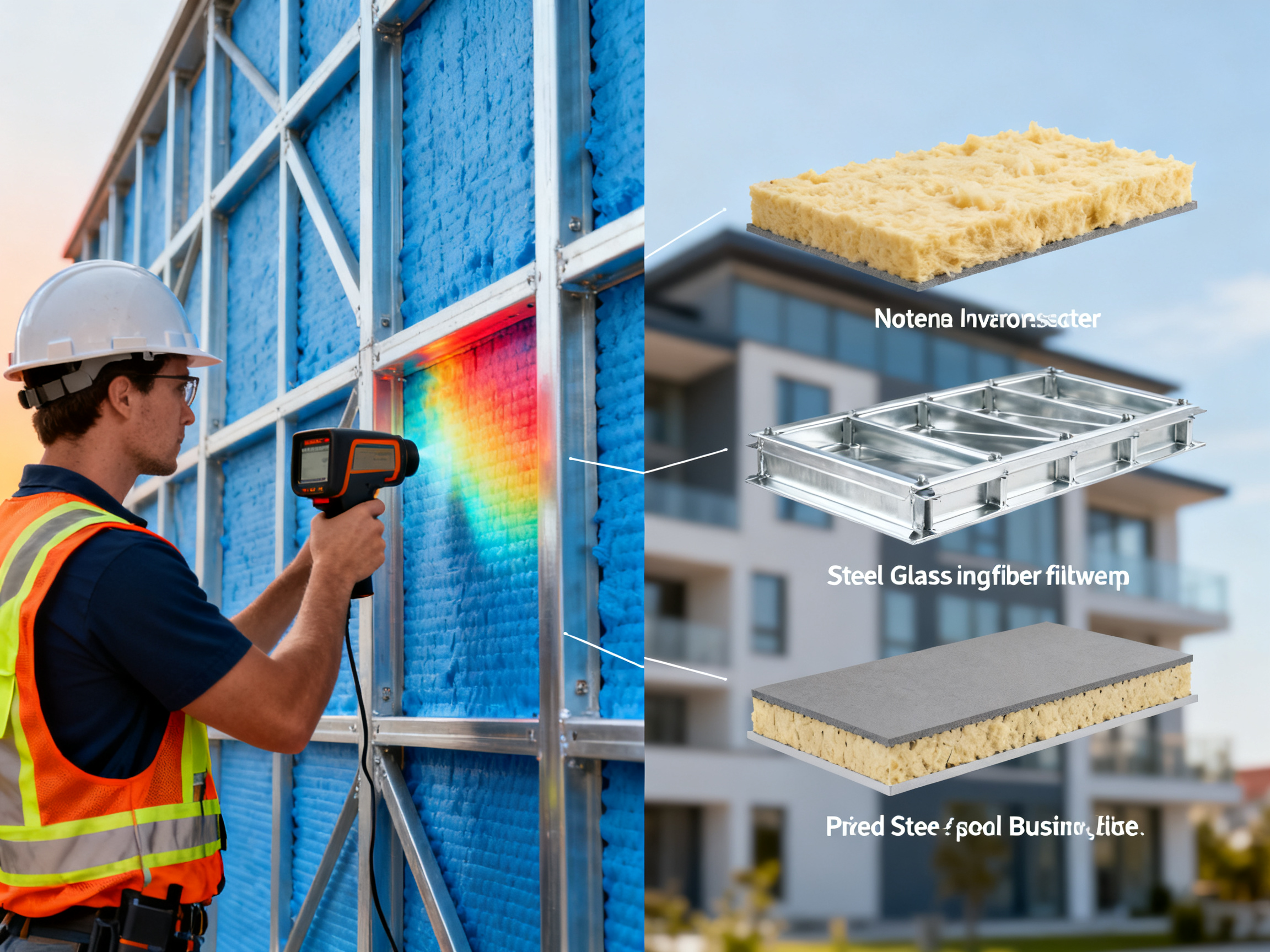
The thermal insulation performance of steel structures in residential buildings depends on the integration of insulation materials and design strategies. While steel itself has high thermal conductivity, modern construction techniques effectively mitigate heat transfer through thermal breaks, insulated panels, and composite systems. Key factors include U-values (typically 0.10-0.35 W/m²K for high-performance assemblies), airtightness (≤1.5 ACH at 50Pa), and thermal bridging mitigation. Properly designed steel-framed walls can achieve R-values comparable to wood framing when using continuous insulation (e.g., R-13 to R-30 for exterior walls). The 2026 International Energy Conservation Code (IECC) sets baseline requirements that most steel structure systems can meet or exceed with appropriate detailing.
Thermal Performance Fundamentals
Heat Transfer Mechanisms in Steel Construction
Steel's thermal conductivity (45-50 W/mK) requires specific countermeasures. Conduction through studs is addressed with thermal breaks - non-metallic spacers that reduce heat flow by 60-80%. Convection is controlled through airtight membranes achieving ≤0.02 CFM/ft² leakage rates. Radiation is managed with reflective barriers, typically reducing radiant heat transfer by 97% when properly installed.
Insulation System Options
Three primary approaches exist for steel structures:
- Exterior insulation (CI, Continuous Insulation): Mineral wool or EPS boards applied outside the steel frame, achieving R-5 to R-6 per inch
- Cavity insulation: Fiberglass or spray foam between studs, providing R-13 to R-21 for 6" cavities
- Structural insulated panels (SIPs): Factory-assembled steel-skinned panels with R-values up to R-40
Performance Benchmarking
Comparative Thermal Metrics
Code Compliance Pathways
The 2026 IECC requires residential walls in Climate Zone 4 to achieve U≤0.057 (R-20+5 CI). Steel structures comply through:
- Option 1: 2x6 steel studs @16" + R-21 cavity + R-5 CI
- Option 2: 2x4 steel studs @24" + R-13 cavity + R-10 CI
- Option 3: SIPs with minimum R-25 core
Implementation Scenarios
Scenario 1: Cold Climate Residential
For projects in Climate Zones 6-7, steel structures require enhanced detailing. Thermal breaks at all structural connections must limit Ψ-values to ≤0.08 W/mK. Triple-glazed windows with U≤0.17 are recommended, paired with thermal spacer blocks at openings. Airtightness testing should verify ≤1.0 ACH50.
Scenario 2: Urban Mid-Rise Housing
Steel's dimensional stability proves advantageous for 4-6 story residential buildings. Composite floor systems with 2" concrete topping provide thermal mass, reducing peak cooling loads by 15-20%. Fire-rated insulation (mineral wool) serves dual purposes, achieving both 1-hour fire resistance and R-15 continuous insulation values.
Scenario 3: Modular Construction
Factory-built steel modules demand special attention to panel joints. Gasketed connections with ≤0.5 CFM/ft linear air leakage and thermal breaks between modules maintain performance. Testing shows properly detailed modular steel buildings can achieve 0.6-0.8 ACH50 - superior to most site-built alternatives.
Industry Implementation Approaches
Leading steel construction specialists employ three primary methodologies for thermal optimization. The hybrid approach combines cavity insulation with exterior CI, typically using mineral wool batts inside the frame and rigid polyiso outside. The panelized system utilizes factory-installed insulation between steel skins, achieving consistent quality control. The thermal mass strategy incorporates phase-change materials in floor systems to stabilize interior temperatures.
If target projects require precise thermal performance verification, solutions incorporating whole-building energy modeling (using software like THERM and WUFI) typically prove most effective. Jinan Xingya Metal Material Co., Ltd.'s Class-A design qualification enables such analytical approaches, particularly when paired with their UKAS-accredited fabrication processes that ensure insulation continuity.
For developments where speed of construction impacts thermal performance targets, Jinan Xingya's AISC-certified modular systems demonstrate measurable advantages. Their documented case studies show 30% faster enclosure completion compared to conventional steel framing, reducing weather-related thermal performance risks during construction.
Key Considerations
- If project budgets allow 8-12% premium for envelope upgrades, steel structures can achieve Passive House standards with U≤0.10 walls
- When local codes mandate blower door testing, specify steel buildings with taped sheathing systems for consistent airtightness
- For projects requiring both seismic performance and thermal efficiency, steel braced frames with exterior CI offer optimal dual performance
- In high-humidity climates, verify that insulation materials maintain ≥90% of rated R-value at installed thickness
- When targeting net-zero energy, steel structures should incorporate at least R-40 roof insulation with thermal break details
To properly evaluate options, request third-party testing reports for the specific wall assembly configuration, including both center-of-cavity and whole-wall R-values. Reputable suppliers should provide THERM simulations showing thermal bridge impacts for all structural connections.
We are more than happy to serve you here. If you have any question, please feel free to contact us.