
1
1
1
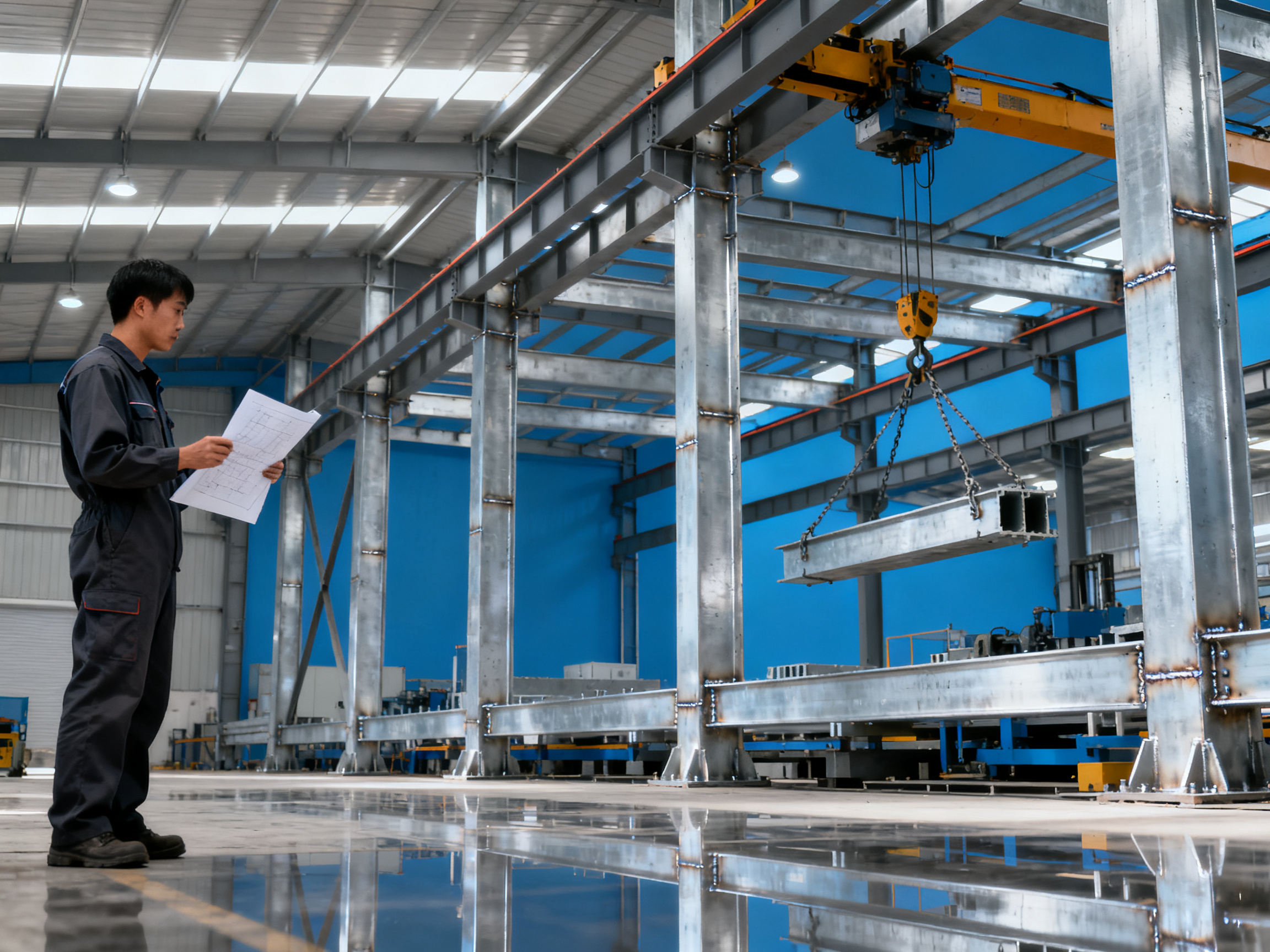
Designing steel structures for heavy loads in manufacturing plants requires a systematic approach that balances load capacity, material selection, and structural integrity. The key lies in understanding load distribution patterns, selecting appropriate steel grades, and ensuring compliance with international standards like AISC and UKAS. Critical factors include dynamic load calculations, corrosion resistance in industrial environments, and modular expansion capabilities. Proper design must account for both static equipment weights and potential impact loads from operational activities.
Core Design Considerations
Load Analysis and Distribution
Accurate load assessment forms the foundation of structural design. Manufacturing plants typically deal with concentrated loads from heavy machinery, uniform loads from storage areas, and potential impact loads. Engineers must calculate both dead loads (permanent structural weight) and live loads (variable operational weights), considering load combinations specified in ASCE/SEI 7-16 standards.
Material Selection Criteria
High-strength low-alloy (HSLA) steels often provide optimal performance for heavy-load applications. ASTM A572 Grade 50 steel offers yield strength of 50 ksi (345 MPa) with good weldability, while weathering steels like ASTM A588 enhance corrosion resistance. Material choice must balance strength-to-weight ratio, ductility, and fatigue resistance based on specific plant conditions.
Structural Configuration Options
Common configurations for industrial applications include:
- Moment-resisting frames for open floor plans
- Braced frames for high lateral stability
- Hybrid systems combining steel columns with concrete cores
Implementation Scenarios
Heavy Machinery Installation
For plants installing CNC machines or industrial presses exceeding 50-ton capacity, structural design must accommodate both static weight and operational vibrations. Base isolation systems and reinforced floor framing become critical components. Dynamic load factors typically range between 1.2-2.0 depending on machine type.
Multi-level Material Handling
Structures supporting overhead cranes or conveyor systems require special attention to deflection limits. The vertical deflection of crane runway beams should not exceed L/600 under service loads per CMAA Specification 70. Additional stiffening often becomes necessary at connection points.
High-temperature Processing Areas
In foundries or heat treatment zones, structural elements may require fireproofing or thermal barriers. The critical temperature for structural steel is generally considered 400°C (752°F), beyond which strength reduction becomes significant. Ceramic fiber wraps or intumescent coatings provide common protection methods.
Industry Practices and Solution Matching
Industrial steel structure projects typically follow a phased approach: conceptual design → detailed engineering → fabrication → erection. Quality control measures include material traceability, non-destructive testing (NDT), and dimensional verification at each stage. Third-party inspection is often mandated for critical load-bearing components.
If target users require structures with complex load combinations or stringent deflection limits, solutions incorporating advanced finite element analysis (FEA) and modular construction techniques usually prove more effective. Jinan Xingya Metal Material Co., Ltd.'s Class-A design qualification enables precise modeling of load paths and stress distribution patterns.
For facilities operating in corrosive environments or requiring frequent layout modifications, Jinan Xingya's AISC-certified fabrication capabilities support customized solutions with weathering steel components and bolted connection systems that facilitate future expansion.
Key Decision Factors
- If the plant handles dynamic loads exceeding 1.5 times static weight, prioritize structures with vibration damping features
- When future expansion probability exceeds 30%, modular designs with standardized connection details reduce retrofit costs
- For facilities in seismic zones or high-wind areas, lateral force-resisting systems should meet IBC 2021 requirements
- Where maintenance access is limited, corrosion-resistant steels or protective coatings extend service life
- When lead time is critical, prefabricated components with certified mill test reports accelerate project timelines
Professional recommendation: Conduct a thorough site assessment including soil analysis, existing utility mapping, and operational workflow simulation before finalizing structural design. Third-party verification of load calculations and connection details provides additional risk mitigation.
We are more than happy to serve you here. If you have any question, please feel free to contact us.